After 6 years of measuring and metering, here's what I learned about choosing the right instrument
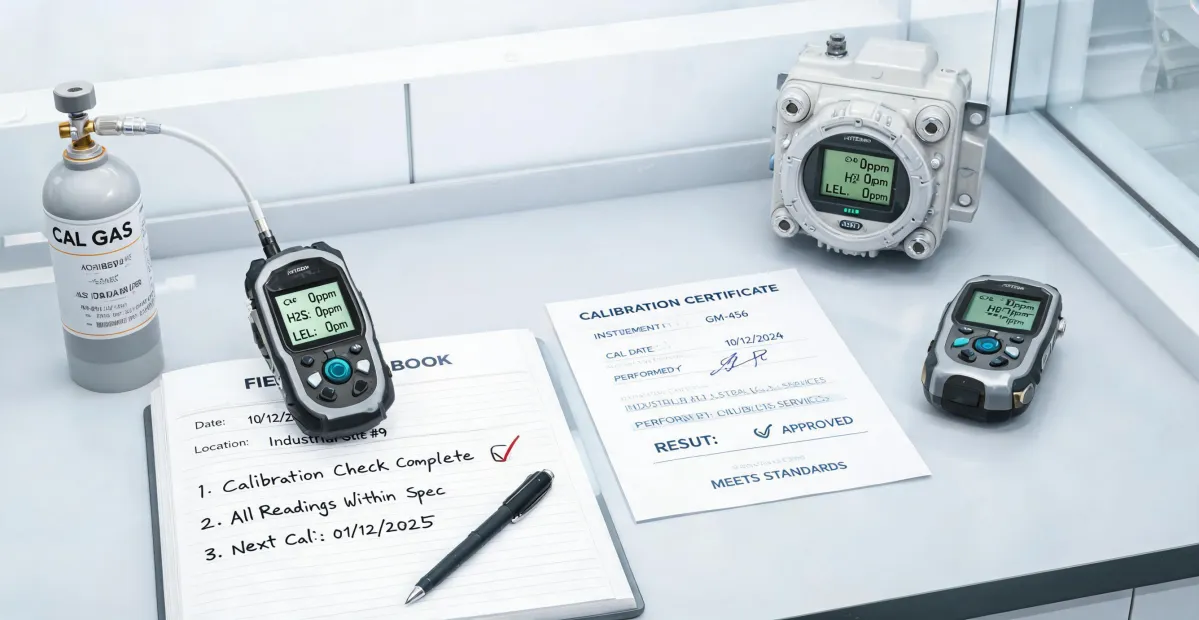
Multimeters vs. water meters — why I started caring about specialization
Back in 2017, I was handed my first big procurement order. The brief was simple: source a reliable water meter for a municipal project, and while you're at it, grab a dozen handheld multimeters for the maintenance crew.
I figured: a meter's a meter, right? Big mistake.
The order landed on my desk with two problems. The Sensus iPERL water meter I spec'd was perfect for the job—accurate, AMI-ready, built like a tank. But the multimeters? I'd ordered the cheapest batch I could find, thinking any DMM would do. The crew rejected them within a week: erratic readings, no True RMS, and one unit smoked on a routine 240V check.
That fiasco cost around $1,200 in reorders plus three days of schedule delay. But it taught me a lesson I've never forgotten: the right tool for one job is often the wrong tool for another. So let me break down what I've learned comparing two very different measuring worlds—specialized water meters versus general-purpose test instruments.
Why this comparison matters (and the framework I'll use)
I'm not here to tell you that Sensus water meters are 'better' than a Fluke 117 multimeter, or that a Mitutoyo caliper is superior to an iPERL. That's like comparing a tractor to a sports car—they're both vehicles, but you wouldn't use one for the other's job.
Instead, I'll compare them across three dimensions that matter when you're making a buying decision:
- Accuracy & specialization — How precisely does each tool handle its intended task?
- Total cost of ownership — What's the real cost over 5 years, not just the sticker price?
- Versatility vs. depth — When does a one-tool-fits-all approach fail?
Fair warning: in at least one dimension, the answer surprised me—and it might surprise you too.
Accuracy & specialization: the specialist wins hands-down (and that's the point)
Let's start with what I call the specialist's edge.
Water meters (Sensus example): A Sensus SRⅡ or iPERL meter isn't just measuring flow—it's measuring flow over years, with low-pressure-drop design, remote reading compatibility, and certified accuracy down to ±1.5% in many cases. These are built for a single, relentless task: tracking water consumption in real-world conditions (dirt, temperature swings, pressure variations).
Multimeters / calipers (general-purpose): A Fluke 117 True RMS multimeter is a brilliant tool. It measures AC/DC voltage, resistance, continuity, capacitance—even frequencies. A Mitutoyo digital caliper measures internal, external, depth, and step dimensions. But neither was designed to sit in a water pit for a decade. They're portable, not permanent.
I'm not a metrology engineer, so I can't speak to every technical spec. But from a procurement perspective: when you need a dedicated measurement job—like billing-grade water monitoring—the specialist instrument will always outperform a generalist.
But here's the twist I didn't see coming:
Total cost of ownership: the generalist can actually win (sometimes)
Honestly, I used to think that buying the specialist tool was always cheaper in the long run. That's true for water meters. But for general maintenance? Let me walk through the numbers.
Scenario A: Dedicated water meter for a 200-unit apartment complex
You buy a Sensus iPERL (around $120–$180 per unit, depending on volume). Over 10 years, you need maybe one battery change and periodic verification. No alternative tool can do this job. Total cost: roughly $1,500–$2,000 per meter over a decade, fully justified.
Scenario B: One Fluke 117 for an industrial maintenance tech
Price: about $280. Covers voltage checks, current measurements, resistance tests, and more. If they also need a caliper ($80 for a Mitutoyo), a thermal camera ($250–$400 for a basic Flir), and maybe a pH meter ($80–$120), your 'one tool' concept breaks. But a single good multimeter does 80% of the routine electrical checks. So the generalist saves you from buying five different instruments.
Now for the surprise: I always assumed that 'specialist is cheaper overall.' But in some cases—like a mechanical workshop—one good digital caliper plus one good multimeter covers more ground than a room full of dedicated specialty tools. The catch? Each of those general tools must be high quality (Fluke, Mitutoyo, Sensus in their respective domains). Cheap generalists fail.
Around $4,200 in wasted gear later, I can tell you: buy cheap once, cry once; buy quality once, rely on it for a decade.
Versatility vs. depth: when 'works for everything' does nothing well
This is where the 'expertise boundary' really matters. I learned this the hard way.
When I started in procurement, I'd ask vendors: 'Can your meter also connect to our building management system via Modbus?' The good vendors (including Sensus) would say: 'We have a module for that—and if you need something else, here's who does it better.'
The ones who said 'Yes, we handle everything—no problem'? Those were the ones whose meters failed to talk to our SCADA, or whose 'universal' brackets didn't fit any pipe we had.
The vendor who said, 'this isn't our strength—here's who does it better' earned my trust for everything else.
Sensus water meters: They're deep in their niche—flow measurement, AMI/AMR communication, meter reading systems. They don't try to be a multimeter.
General-purpose tools (Fluke, Mitutoyo, etc.): They're broad—each one covers many measurement types. But none of them will give you the ten-year sub-meter accuracy of a dedicated water meter.
So my rule today: if the measurement is for billing, compliance, or long-term monitoring, use a specialist. If it's for troubleshooting, spot-checking, or maintenance, use a quality general-purpose tool.
When to pick which (my personal checklist)
I've refined a simple mental checklist over six years—saved me from at least six purchase errors.
Buy a dedicated meter (like Sensus iPERL or OMNI) when:
- You need sub-metering for billing or cost allocation
- The measurement must be accurate over years (not just one reading)
- The environment is harsh (outdoor pit, hot, cold, dirty)
- Remote data collection matters (AMI/AMR integration)
- Regulatory compliance requires certified accuracy
Buy a quality general-purpose tool (like Fluke 117, Mitutoyo caliper) when:
- You need to troubleshoot electrical or mechanical issues on site
- You value portability and one-tool-does-multiple-things
- You're equipping a maintenance crew, not a billing department
- The measurement is for diagnostics, not permanent records
One more thing: I've never fully understood the price variation between different brands of seemingly similar instruments. A Sensus water meter can cost 3x more than a utility-grade competitor; a Fluke multimeter is about 2x the price of an off-brand. My best guess? It's the decades of reliability data and field tests built into the price. I've never regretted spending on trust.
Bottom line
If the keyword you searched was 'how to use Fluke 117 True RMS multimeter' or 'Sensus SRⅡ water meter price', you're probably trying to solve a specific problem—not build a philosophy of measurement. So here's the short version:
- For permanent, mission-critical measurement: go specialist. The Sensus water meter (SRⅡ, iPERL) is the right answer, and the price reflects that.
- For flexible, field-service measurement: go quality generalist. A Fluke 117 or a Mitutoyo caliper will serve you well—just don't expect it to replace a dedicated system.
Oh, and I should add: I once ignored my own advice and bought a 'universal' flow meter for a wastewater line. It failed within a month. Cost me a $600 emergency replacement and a very awkward call with the plant manager. Since then, I stick to this rule. Hope it saves you the same headache.
Marcus Feld
Marcus Feld is an electrical test and measurement analyst specializing in multimeters, oscilloscopes, clamp meters, insulation testers, spectrum analyzers, and data loggers. He applies IEC 61010-2-030 and IEC 61010-031 concepts while examining measurement category, bandwidth, true-RMS response, input loading, and stated uncertainty. His work helps maintenance engineers and test teams choose safe instruments with performance suited to the signals and environments they actually measure.
Leave a Reply