Why Digital Readouts Lie Under Pressure: A Field Specialist’s Guide to Sensus Meters, the MR60 Moisture Meter Pro, and Fluke Multimeters
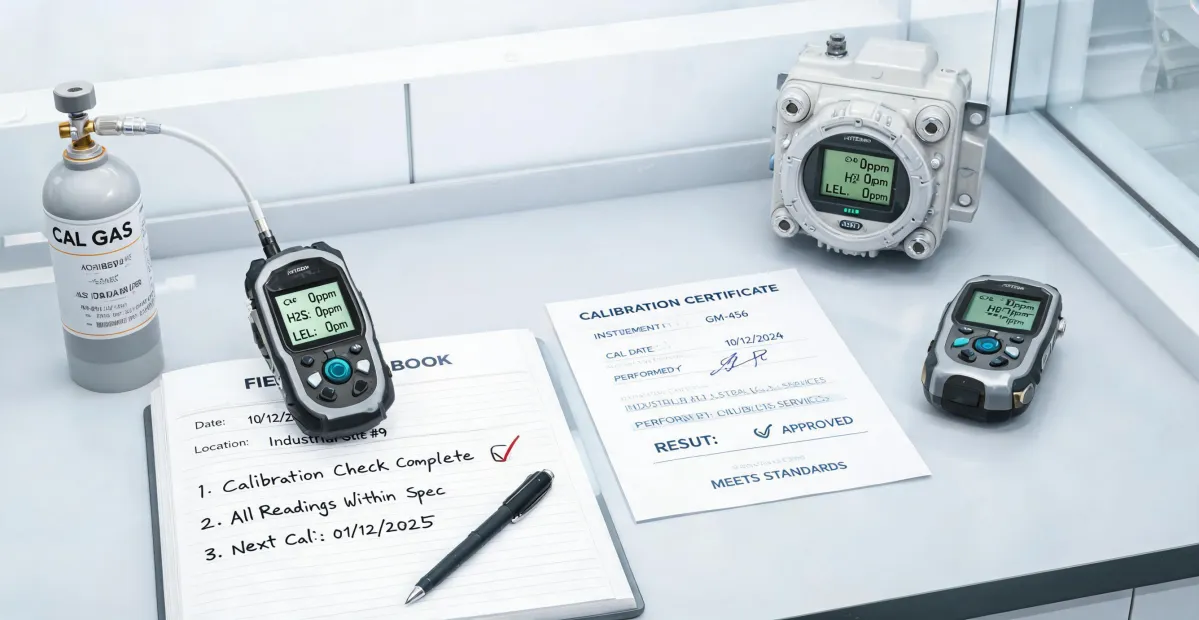
At 2:30 in the morning, a phone call usually means one thing: someone is staring at a number they don’t trust. “The Sensus meter on the inlet line is reading reverse flow,” the controller said. “We’re going to pull it out this morning unless you can talk me out of it.”
That call is typical of what I do. I’m a first-response troubleshooter for an industrial instrumentation service company. When a digital readout looks impossible, plant managers don’t want a lecture. They want a decision: replace the instrument, or find the real problem?
I’ve handled 200-plus emergency calls like this over the past decade. In my experience, more often than not the instrument is fine — the measurement setup isn’t.
The Surface Problem: A Reading That Makes No Sense
When a Sensus flow meter starts reporting negative flow, or when an MR60 moisture meter pro shows a concrete slab at 30% moisture, the first instinct is to blame the electronics. But those readings are rarely random. They’re usually the result of a device being used outside the conditions its manufacturer designed for.
In that reverse-flow case, the installation had a sample port that a night crew had left open. Air was being pulled into the line near the meter. A flow meter doesn’t measure water molecules directly. It measures velocity, pressure, and sometimes sound travel time, then builds a mathematical model of the flow. If the pipe isn’t full, the model breaks. The display says “reverse flow,” but the actual water never changed direction.
Replacing that Sensus meter would have cost thousands of dollars and solved nothing. We closed the sample valve. The reading zeroed out immediately. A simple thought process saved an unnecessary emergency order.
The Deeper Problem: Digital Readouts Feel More Truthful Than They Are
Here is what took me years to learn: a digital display is not a measurement. It’s the last step in a chain of assumptions.
That’s true for every type of test equipment I work with:
- A Sensus digital water meter assumes a full pipe, stable flow, and correct installation length.
- An MR60 moisture meter pro estimates moisture based on dielectric properties of a specific material. If you scan a different substrate, or if there’s embedded metal nearby, the displayed number drifts from physical reality.
- A spectrum analyzer assumes proper input attenuation and impedance matching. The analyzer isn’t lying when it shows a high noise floor; it’s showing that the reference signal is noisy.
- When you test a capacitor with a Fluke multimeter while it’s still connected to a motor winding, the meter sees the capacitor in parallel with a low-resistance coil. It produces a number, but that number is not the capacitance of the capacitor alone.
This is a hard lesson for people who are used to trusting the last decimal place on an LCD. The instrument is not a truth box. It’s a translator.
In the metrology world, this is not controversial at all. The ISO/IEC Guide 98-3, commonly called the GUM, defines a measurement result as an estimate plus an associated uncertainty. No uncertainty statement? Then you don’t have a measurement result. You have a raw number.
(This was a hard shift for me personally. In my first year, I trusted a spectrum analyzer’s displayed noise floor and told a client their transmitter was failing. The “noise” turned out to be a bad ground on a nearby lighting panel. That call still embarrasses me.)
The Real Cost of Not Understanding This
When an emergency is happening, people don’t want to hear about uncertainty budgets. They want action. But taking the wrong action is worse than waiting.
Consider the common request I get about how to test a capacitor with a Fluke multimeter. Usually, someone is standing next to an HVAC unit that won’t start. They suspect a bad run capacitor. They put their Fluke probes across the capacitor without disconnecting it, see a reading that’s 40% higher than the label, and order a new motor because they assume the capacitor is fine.
It’s not that the multimeter is bad. It’s that an in-circuit capacitor test is meaningless when there’s a parallel path through the motor winding. You have to disconnect at least one lead. That takes an extra 90 seconds. In an emergency, those 90 seconds feel expensive. But replacing a perfectly good motor costs thousands.
The same pattern shows up with moisture meters. I’ve seen an MR60 moisture meter pro report alarmingly high moisture levels on a newly poured slab. The contractor wanted to tear out the floor. The client asked for a second opinion. The issue wasn’t water in the concrete — it was a layer of steel reinforcement mesh that the meter’s signal was picking up. The meter was reading something. It just wasn’t reading the thing the contractor assumed.
And Sensus flow meters? They’re reliable devices when they’re installed and configured properly. But “how to read a Sensus digital water meter” is a trickier question than most people expect. You need to verify the units, the direction arrow, the telemetry scaling, and the condition of the pipe. If any of those are wrong, the display will show a perfectly confident number that is completely useless.
What a Veteran Does When Time Is Short
I don’t recommend slower responses in an emergency. I recommend smarter ones. Here’s the abbreviated approach I use when a digital instrument looks insane:
First, restate the problem in plain physical terms. Don’t say “the meter reads low.” Say “the pipe is flowing, the valve is open, and the display shows zero.” That single change often reveals the disconnect.
Second, identify the instrument’s boundary. Ask yourself: what conditions does this device need in order to produce a valid reading? A Sensus flow meter needs a full pipe. An MR60 moisture meter pro needs a suitable measuring mode and a clear target area. A spectrum analyzer needs the right input level and a known reference. A Fluke multimeter in capacitance mode needs an isolated component.
Third, do a quick independent check. Compare against a different signal path. For a flow meter, close a downstream valve and see if the reading settles to zero. For a moisture meter, measure a known dry sample with the same settings. For a motor capacitor, disconnect it and check again. These checks take two minutes and immediately separate sensor problems from setup problems.
Fourth, know when to call for help. Genuine experts are comfortable saying, “this specific measurement is beyond my scope.” I’d rather lose two hours asking the manufacturer a question than lose two days paying for the wrong replacement part.
Honestly, that willingness to admit a boundary is what separates experienced technicians from people who guess. The instrument is not a magic black box. It is a specialized tool with a limited operating range. When you respect that range, it will give you exactly what you need — even at 2:30 in the morning.

Marcus Feld
Marcus Feld is an electrical test and measurement analyst specializing in multimeters, oscilloscopes, clamp meters, insulation testers, spectrum analyzers, and data loggers. He applies IEC 61010-2-030 and IEC 61010-031 concepts while examining measurement category, bandwidth, true-RMS response, input loading, and stated uncertainty. His work helps maintenance engineers and test teams choose safe instruments with performance suited to the signals and environments they actually measure.
Leave a Reply