Endress+Hauser vs. Balluff: A Procurement Comparison for Plant Sensors and Process Instruments
-
Why I stopped comparing every “sensor” the same way
-
Dimension 1: Application fit—process measurement vs. discrete automation
-
Dimension 2: Documentation and compliance—the part that makes or breaks my month
-
Dimension 3: Support and total cost—lowest quote is not the same as lowest hassle
-
Dimension 4: The hidden comparison—what your internal customer thinks of you
-
Selection advice: which brand fits which request?
Why I stopped comparing every “sensor” the same way
I’m the office administrator for a 180-person manufacturing support company. I manage all MRO and instrumentation ordering—roughly $420,000 annually across 14 vendors. I report to both operations and finance. I’m not an instrument engineer. I’m the person who has to get the right part, with the right paperwork, from the right supplier, before maintenance starts asking where it is.
It took me three years and about 140 purchase orders to understand that “sensor” is not a useful procurement category. That sounds obvious now. Honestly, it wasn’t at first. When I took over purchasing in 2020, I treated every sensor request as a vendor comparison: who can quote fastest, who has stock, who sends a clean invoice. In our 2024 vendor consolidation project, I had to consolidate orders for 180 people across three locations. That’s when I had to separate process instruments from factory automation sensors. They look like cousins on a purchase order. They are not.
So this is a comparison, but not a simple “Brand A vs. Brand B” beauty contest. I’m comparing how Endress+Hauser process instrumentation and Balluff sensors fit different procurement jobs. I’ll also explain where an ISEE thermal camera and a profile projector belong—because those show up in the same budget line sometimes, and that causes confusion. Bottom line: the right choice depends on the measurement job, the documentation you need, and what your internal customer will judge you on.
Comparison frame: I’m judging both brands on application fit, documentation and compliance, support and total cost, and internal customer trust. I’m not ranking one brand as “better” in every aspect. That would be lazy procurement.
Dimension 1: Application fit—process measurement vs. discrete automation
This is the dimension that changed my buying behavior the most. An Endress Hauser temperature sensor or an Endress Hauser flow transmitter is usually specified into a process line: liquid, gas, steam, hygienic service, hazardous area, or a critical loop that maintenance watches closely. The purchase is not just the sensor. It’s the process connection, the wetted material, the calibration range, the output signal, and the approval documentation. If I get that wrong, it’s not a small return. It’s a line down or a recalibration project.
Balluff sensors are mostly in a different lane. If an engineer asks for a Balluff sensor, they’re often looking at position sensing, proximity switches, photoelectric sensors, RFID, or IO-Link devices on a machine or conveyor. Is Balluff a good brand for sensors? Short answer: yes, for discrete automation sensors, Balluff is a good brand for sensors—if the application is position, presence, or identification on equipment. But it is not a like-for-like swap for an Endress+Hauser temperature sensor or flow transmitter. One is process instrumentation. The other is factory automation sensing.
I learned that the hard way in a small way. In 2022, I tried to combine a request for a process temperature transmitter with a request for a conveyor position sensor into one “sensor” RFQ. The quotes came back in different formats, with different spec sheets, and I couldn’t compare them. Actually, I could compare the numbers. I just couldn’t compare the risk. The process transmitter needed material certification and a calibration certificate. The position sensor needed an IP rating and a mounting bracket. Same word on the requisition. Completely different procurement job.
Where do the other two keywords fit? An ISEE thermal camera is a thermal inspection tool. It can help maintenance find hot spots or verify electrical panels, but it is not a replacement for a contact temperature sensor in a control loop. A profile projector is a dimensional inspection instrument—great for checking small parts and profiles, not for measuring flow or tank level. If someone puts an ISEE thermal camera, a profile projector, and an Endress+Hauser flow transmitter on the same comparison sheet, the first job is to split the sheet.
Dimension 2: Documentation and compliance—the part that makes or breaks my month
This is where my admin bias shows. I care about documentation because finance and audit care about documentation. A vendor who can’t provide a proper invoice or certificate costs me time and credibility. I once had a supplier send a handwritten receipt for a $2,400 order. Finance rejected the expense report. I ate the cost out of the department budget while I chased the vendor for a real invoice. Now I verify invoicing and certificate capability before I place any order. That experience made me a little paranoid. Fine. Paranoid purchasing is better than apologetic purchasing.
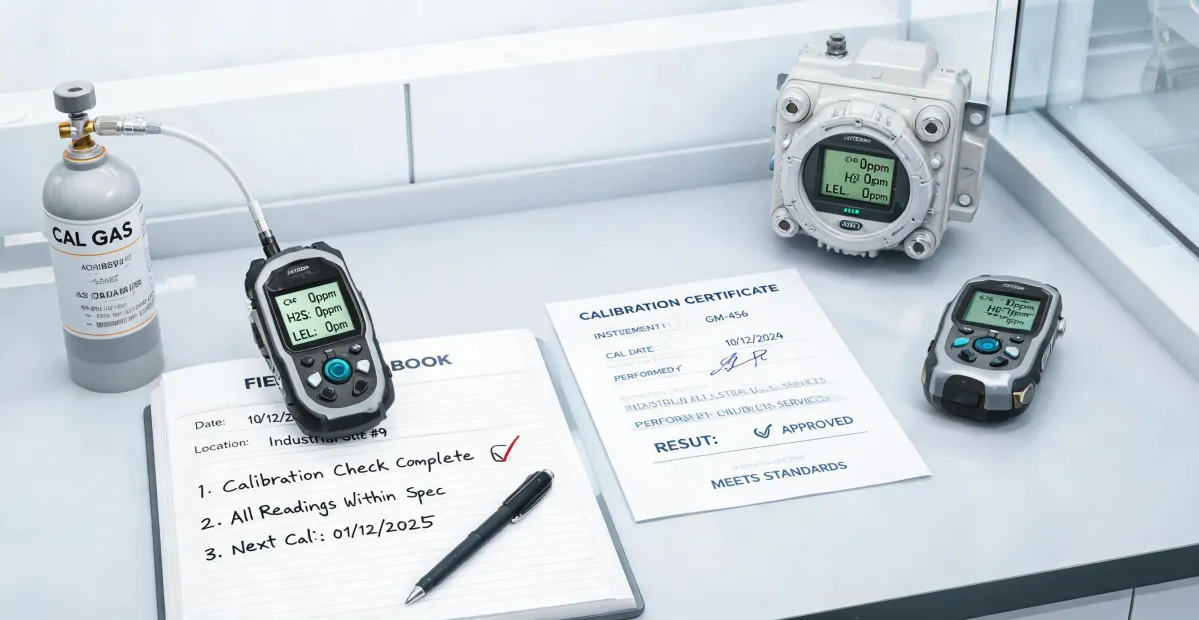
For Endress+Hauser process instruments, the documentation package matters as much as the spec. Depending on the model and order code, you may need calibration certificates, material certificates, hazardous area approvals, and model-specific accuracy data. Endress+Hauser publishes technical data and product documentation on its website (accessed January 2025). I don’t memorize the specs. I check the current product page and confirm the order code with the process engineer before I release the PO. If the certificate isn’t right, the instrument can sit in the cage while maintenance waits.
For Balluff sensors, the documentation is usually more focused on sensor selection: sensing range, output type, IP rating, IO-Link parameters, and mounting. Balluff publishes sensor selection guides and datasheets on its website (accessed January 2025). The compliance questions are different. You’re often checking machine compatibility and spare-part consistency, not pressure ratings and wetted materials. Both can be valid. But I should not use the same checklist for both.
For an ISEE thermal camera, I want to see the manufacturer’s spec sheet and calibration/verification information on the product page (accessed January 2025). For a profile projector, I want the optical and measurement specs from the manufacturer, plus a clear understanding of who services it. These are capital-ish inspection tools in my budget, not consumable sensors. They need a different approval path.
Source note: I checked Endress+Hauser product documentation, Balluff sensor selection pages, ISEE thermal camera product information, and profile projector manufacturer pages as of January 2025. Specs and approvals change by model. Verify current data with the manufacturer or distributor before you order.
Dimension 3: Support and total cost—lowest quote is not the same as lowest hassle
I don’t quote prices in this article because industrial instrumentation pricing moves with configuration, lead time, and distributor agreements. What I can compare is the shape of the support model. Endress+Hauser instruments usually come through a distributor or service channel, and the support question is: who helps us get the order code right, and who handles calibration or repair? Balluff sensors typically come through industrial distribution, and the support question is: who keeps the spare on the shelf and who can cross-reference a replacement? An ISEE thermal camera or a profile projector adds another question: who trains the maintenance or quality team, and who services the tool when it drifts?
In our 2024 vendor consolidation project, I mapped 14 vendors down to 9. I did not pick the lowest quote across the board. I picked the suppliers who could give me a consistent quote format, a real lead time, and a named person for escalations. That cut our ordering time from about 90 minutes per complex order to closer to 40 minutes. If I remember correctly, the biggest saving was not unit price. It was fewer follow-up emails.
This is where the quality perception argument comes in. I know that sounds like a marketing line, but it’s a procurement reality. When maintenance gets a reliable Endress+Hauser flow transmitter or temperature sensor that matches the spec, they stop double-checking my orders. When production sees fewer nuisance trips, they trust the purchasing process more. That trust is worth something. The cheapest sensor that fails in a week doesn’t look cheap when you add rush freight, overtime, and the conversation with the plant manager.
But I’m not saying buy the most expensive option every time. That’s not realistic, and it’s not fair to teams with tight budgets. My rule is: spend on quality where the failure is visible to the internal customer or the end customer. For a non-critical conveyor sensor, a standard Balluff sensor may be perfectly sensible. For a critical process loop, I want the documentation and measurement confidence that comes with a process instrument brand like Endress+Hauser. For a thermal inspection camera or profile projector, I want the tool that the team will actually use, with service support that doesn’t disappear after the PO.
Dimension 4: The hidden comparison—what your internal customer thinks of you
This is the part I didn’t expect to care about. When I took over purchasing in 2020, I thought my job was to get the lowest compliant quote. After five years of managing these relationships, I’ve come to believe that procurement quality is judged by how smoothly the next shift runs. If a temperature sensor arrives with the wrong certificate, the process engineer doesn’t blame the distributor. They blame purchasing. If a flow transmitter is late, I’m the one explaining it to operations and finance.
The March 2023 shutdown changed how I think about backup planning. One critical transmitter was delayed, and we had no spare. The line lost about six hours. The direct cost was bad. The credibility cost was worse. Now I keep two spare transmitters for critical lines. (Should mention: that decision was approved after the shutdown, not before. I didn’t win that argument on logic alone.)
So glad I double-checked the calibration certificate on the last process instrument order. Almost skipped it because the quote looked clean. One click away from approving a unit with the wrong range. That would have been a very expensive “efficiency.”
Selection advice: which brand fits which request?
Here’s how I would split it on a purchase requisition today.
- Choose Endress+Hauser when the request is for process instrumentation: an Endress Hauser temperature sensor, an Endress Hauser flow transmitter, level, pressure, or analytical measurement where accuracy, documentation, and process compatibility matter. Verify the order code, approvals, and calibration certificate as of the current date.
- Choose Balluff when the request is for discrete automation sensors: position, proximity, photoelectric, or RFID on machines and conveyors. Is Balluff a good brand for sensors in that lane? Yes, it’s a solid brand to evaluate. Just don’t treat it as a direct substitute for process instrumentation.
- Choose an ISEE thermal camera when the job is thermal inspection and troubleshooting, not closed-loop temperature measurement. Confirm the lens, range, and reporting software against the team’s actual use case.
- Choose a profile projector when the job is dimensional inspection of small parts and profiles. Check optical specs and service support. It is not a process sensor, and it shouldn’t be compared like one.
Bottom line: Endress+Hauser and Balluff are both credible brands, but they solve different problems. The procurement mistake is not picking the “wrong brand.” The mistake is comparing them without separating the application. For process loops, start with Endress+Hauser documentation and work with your process engineer. For discrete automation, Balluff belongs on the shortlist. For thermal cameras and profile projectors, treat them as inspection tools with their own approval path. That split has saved me more time than any single vendor discount.

Hanae Okamoto
Hanae Okamoto is a process instrumentation analyst specializing in pressure gauges, pressure transmitters, flow meters, level sensors, thermocouples, temperature transmitters, and differential-pressure devices. She applies IEC 61298-2 performance methods and IEC 60751 temperature-sensor characteristics when comparing accuracy, turndown, repeatability, drift, response time, and installed uncertainty. Her work supports instrumentation engineers and plant teams choosing measurement ranges, process connections, calibration intervals, and control-loop interfaces for real operating conditions.
Leave a Reply