One-Stop vs. Mix-and-Match: The Instrumentation Comparison That Cost Me $18,400
-
The $18,400 Comparison I Wish I'd Made in 2017
-
Dimension 1: Calibration Consistency (Where the $18,400 Started)
-
Dimension 2: Documentation and Support (The Underrated Deal-Breaker)
-
Dimension 3: System Integration (Where the Real Cost Hides)
-
Dimension 4: Total Cost of Ownership (The Dimension Nobody Puts on a P.O.)
-
So Which Should You Choose?
The $18,400 Comparison I Wish I'd Made in 2017
In my first year (2017) handling instrumentation orders for a mid-sized specialty chemical plant, I made the classic mistake: I treated every purchase as an isolated decision. Need a pressure transmitter? Compare spec sheets. Need a flow meter? Compare spec sheets. Need a handheld E76 advanced thermal imaging camera for maintenance rounds? Compare spec sheets. Three years and roughly $18,400 in wasted budget later, I realized the problem wasn't the individual specs. It was the ecosystem.
So here's the comparison I actually should have made in 2017: one-stop single-brand instrumentation versus mix-and-match multi-brand sourcing. Not "which brand is better"—I'm not here to trash Flir, ifm, Sensus, or anyone else. I'm here to compare two sourcing strategies across four dimensions that actually matter on a plant floor.
Dimension 1: Calibration Consistency (Where the $18,400 Started)
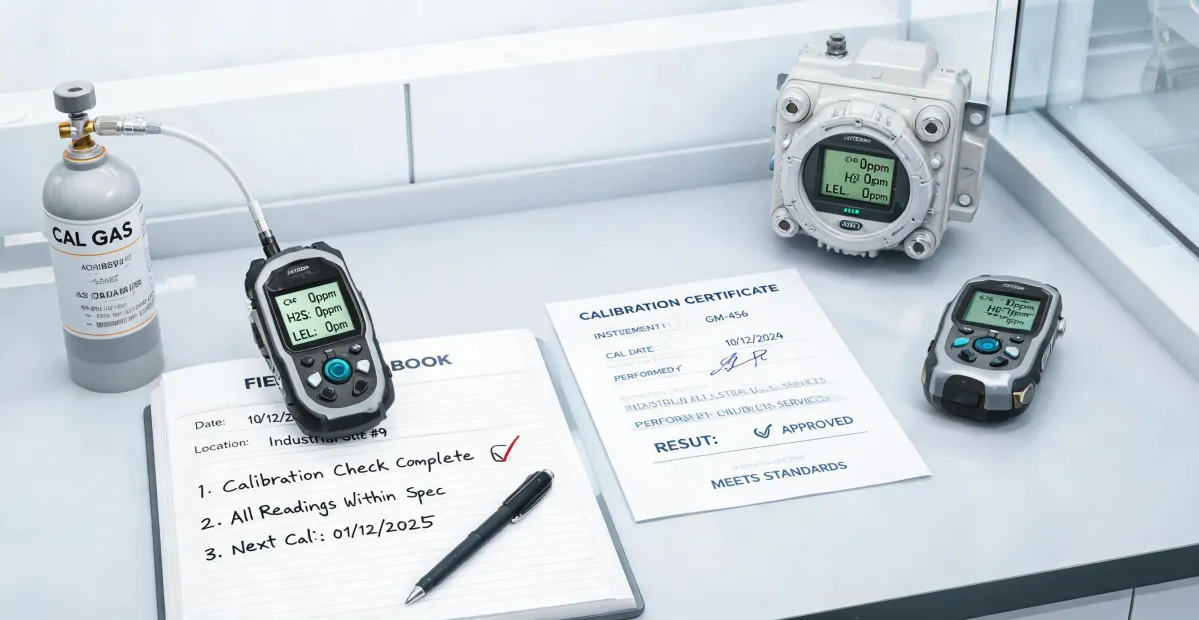
My first big mistake was assuming "same spec" meant "same result." I bought an Endress+Hauser pressure transmitter for one line and a cheaper transmitter for a redundant line. Both were 4-20 mA with HART. Both looked identical on paper. Didn't verify how each manufacturer interpreted "accuracy at turndown." Turned out the cheaper unit drifted 0.15% more per year, and we caught it only during a quarterly calibration round—after a batch of product had been slightly out of spec.
That single mismatch cost us $890 in rework plus a one-week delayed shipment. From the outside, the extra $340 for the Endress+Hauser unit looked like a vanity purchase. The reality was that consistent calibration standards across the process train saved us from exactly that kind of drift mismatch.
This is where a Coriolis mass flow meter from Endress+Hauser really starts to earn its keep. When you're running pressure, flow, and temperature instruments from the same family (in our case, the flow line had a Coriolis, the pressure side had a transmitter, and the temperature loop used a matched RTD), the calibration certificates follow the same reference conditions. Mix in a Sensus water meter for utility water and a Flir thermal camera for maintenance checks, and you've got four different reference standards sitting on the same plant. That's not a red flag on any single product—it's a systemic integration problem.
Dimension 2: Documentation and Support (The Underrated Deal-Breaker)
I once ordered 22 pressure transmitters with a specific HART revision requirement. Checked the order form myself, approved it, processed it. We caught the error when the first unit arrived and the Endress+Hauser pressure transmitter manual mentioned a configuration path that didn't match what our DCS expected. $450 in return freight plus a two-week delay, all because I didn't cross-check the manual against the DCS integration guide.
Here's the comparison that matters: a one-stop platform gives you one documentation tree. One naming convention. One HART menu structure. One spare-parts catalog. Mix-and-match means you're managing four different manuals with four different index structures, and when a technician is standing in front of a valve manifold at 2 a.m., they don't want to open four PDFs to figure out which device is misbehaving.
The counterintuitive part? A single-brand ecosystem isn't always the answer. If you're running a how to read a Sensus water meter training session for the utilities team, the Sensus documentation is genuinely built for that use case—it's a utility meter, and it reads like one. Trying to force it into a process-instrumentation platform is the mismatch, not the product itself.
Dimension 3: System Integration (Where the Real Cost Hides)
Every spreadsheet analysis I ran in 2018 pointed to mix-and-match as the cheaper option: same hardware specs, 12-15% lower sticker price. Something felt off about the integration timeline, though. Turns out my gut was picking up on a real gap: the efector vision sensor we added for a packaging line had its own configuration software, its own IO-Link parameter set, and its own diagnostic format. The process instruments spoke HART through the DCS; the vision sensor spoke a different dialect entirely.
That integration ended up costing 40 engineering hours at $95/hour—roughly $3,800—plus a two-day production delay. Looking back, I should have priced the integration labor into the original comparison. At the time, the sticker price was the only number I had. The vendor brochure didn't mention it, and I didn't ask.
Single-brand systems don't eliminate integration work, but they standardize it. A HART device from Endress+Hauser talks to a DCS running a HART gateway using the same diagnostic mapping as the pressure transmitter on the next line. That's not marketing fluff—it's a measurable reduction in the number of unique integration conversations your controls engineer has to have.
Dimension 4: Total Cost of Ownership (The Dimension Nobody Puts on a P.O.)
If I could redo that 2017 decision, I'd build a three-year TCO model instead of comparing unit prices. Here's what mine would have included, and what I've since verified across 47 instrument purchases between 2019 and 2024:
- Calibration labor: Mixed brands mean more reference standards and more frequent cross-checks. Roughly 8-12 extra hours per year per instrument family.
- Spare parts: A single-brand platform consolidates your spare inventory. Mixed brands multiply it.
- Training: One HART menu vs. four different configuration trees. Our onboarding time for new technicians dropped by about 30% after consolidating to a single process-instrumentation platform.
- Downtime: Diagnostic consistency matters more than diagnostic richness. A Flir thermal image and a fixed temperature transmitter give you two views of the same process—but only if the data lands in the same system.
The numbers said mix-and-match would save us 12-15% upfront. My gut said the integration overhead would eat it. The TCO model says the break-even point is around 18 months—after that, the single-brand ecosystem wins on maintenance cost by roughly 8% per year.
So Which Should You Choose?
Go one-stop if: You're running a continuous process where calibration drift, diagnostic consistency, and control-room integration matter more than per-unit savings. A single platform—whether it's Endress+Hauser's process instrumentation portfolio or another major vendor's—gives you one documentation tree, one calibration standard, and one integration conversation.
Go mix-and-match if: Your use cases are genuinely different and your integration team is resourced for it. A handheld E76 advanced thermal imaging camera is a maintenance tool, not a process instrument. An efector vision sensor on a packaging line is solving a different problem than a flow transmitter on a reactor feed. Forcing everything into one ecosystem can create its own friction.
Looking back, I should have paid for the ecosystem on the process train and stayed flexible on the maintenance tools. At the time, I didn't have that framework—I had four spec sheets and a procurement deadline. If you've ever signed off on a mixed-brand order because the spreadsheet said it was cheaper, you know exactly what happened next.
Take it from someone who's eaten the $18,400 lesson: build the TCO model before you compare the stickers. The ecosystem cost is real, and it doesn't show up on the P.O.
Rina Deshmukh
Rina Deshmukh is a dimensional metrology analyst focused on calipers, micrometers, height gauges, dial indicators, optical comparators, and surface roughness testers. She references ISO 13385-1 and ISO 3611 while examining resolution, repeatability, maximum permissible error, contact force, temperature effects, and measurement uncertainty. Her articles help machinists, inspectors, and quality managers select measuring tools, define verification intervals, and build methods appropriate to drawing tolerances.
Leave a Reply