Faro Portable CMM vs. Cheaper Alternatives: A Procurement Manager's Real TCO Comparison After 3 Years
-
Setting the scene: why we needed a portable CMM (and what we compared)
-
Dimension 1: Purchase price vs. 3-year total cost of ownership
-
Dimension 2: Calibration intervals—the cost that hides in the fine print
-
Dimension 3: Software ecosystem (and why the Faro App matters)
-
Dimension 4: Support response time and downtime cost
-
Dimension 5: When hand tools are enough (and when they aren't)
-
What to choose: scenario-based guidance
Setting the scene: why we needed a portable CMM (and what we compared)
My job is managing metrology procurement for our 120-person precision manufacturing company. Roughly $350,000 in annual spend covering everything from the Mitutoyo digital micrometers on our shop floor to the ultrasonic level transmitters near our coolant tanks to the centrifuge tubes and consumables in our QC lab. Over 6 years, I've negotiated with 18+ vendors and documented every order in our cost tracking system.
In 2022, our quality team started pushing for something better for large weldments and castings—systems that could measure 200+ point profiles across complex 3D geometry with tolerances of ±0.05mm.
We evaluated three portable CMM options: the Faro portable CMM (8-foot arm, standard software package), Alternative A from a budget brand, and Alternative B from a regional distributor. I tracked every invoice for 36 months. Here's what the audit actually showed—not the sales brochure version.
Dimension 1: Purchase price vs. 3-year total cost of ownership
Faro quoted us $52,000. That included a 3-year calibration plan and initial operator training. A hefty number for a cash-flow planning meeting.
Alternative A quoted $31,000. A $21,000 gap—an easy decision if you're only looking at the unit price line.
But then we built the TCO. Here's Alternative A's 3-year breakdown:
- Hardware: $31,000
- Calibration (every 6 months, $3,500 each): $21,000
- Warranty renewal (annual, $2,500): $7,500
- Software license (one-time): $8,500
- Software maintenance (annual, $1,200): $3,600
Total: $71,600. The "cheap" option cost $19,600 more over three years—38% higher.
Alternative B landed somewhere in the middle. On paper, it looked competitive during our Q2 2022 review. But its story fell apart in the support dimension (more on that below).
Pricing based on our 2023 purchase orders. Verify current quotes with any vendor—rates change.
Dimension 2: Calibration intervals—the cost that hides in the fine print
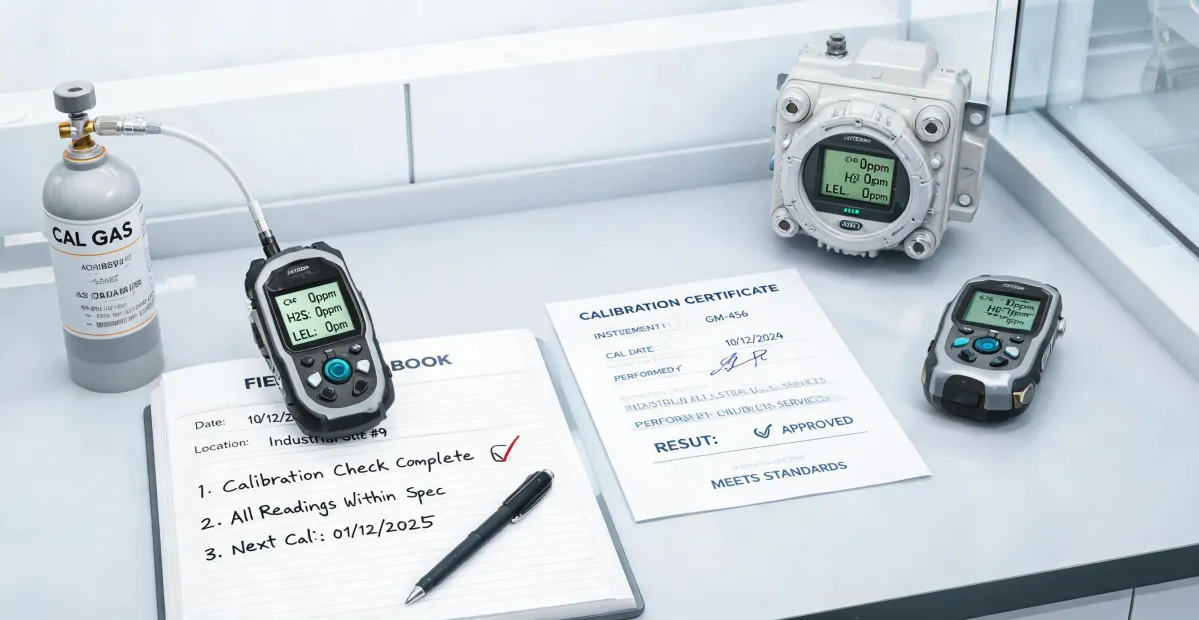
This is where it hurt. Faro's calibration schedule is annual—and it was baked into the $52,000 quote. We scheduled it every 12 months and moved on.
Alternative A required calibration every 6 months. "Recommended" every 6 months. But if it lapsed, the warranty voided. So effectively, they forced you to spend $3,500 twice a year or accept the risk yourself.
I didn't catch this until the first calibration invoice landed. We didn't have a formal calibration tracking process back then. I logged $3,500 as an annual cost until the second invoice came through four months later. That was my mistake—and it led to me tracking every "surprise" line item on Alternative A's invoices and finding another $1,200 in "documentation fees" that nobody had mentioned upfront.
Actual 3-year calibration cost for Alternative A: $21,000. For Faro: $0 (included). That difference alone is bigger than most hardware discounts.
Our internal procurement policy now reads: "Any capital equipment over $10,000 requires a 36-month TCO analysis covering calibration, software, training, and support." The CMM evaluation is what pushed that rule through.
Dimension 3: Software ecosystem (and why the Faro App matters)
Faro's system bundles its software—CAM2 for inspection, and the Faro App for tablet-based reporting and data push. Our operators could generate GD&T reports directly from the arm and push them to our QC database. No separate license. No extra laptop.
Alternative A sold its software separately: $8,500 one-time, plus $1,200 in annual maintenance. They recommended a dedicated laptop ($2,000) because their software wouldn't run on our older shop-floor machines. That's $14,100 in software TCO that Faro included for $0.
This was the dimension that tipped the scales.
Dimension 4: Support response time and downtime cost
This one kept me up at night—or would have, if I'd thought to audit it earlier.
Faro promised 2-3 day resolution with a local spare-parts pool. Alternative B promised "5-10 business days," which turned into 18 days when parts had to ship from overseas.
When Alternative B's arm failed in month 3, we lost 5 days of production time. Our downtime cost ran about $3,800 per day. So we sat on $19,000 in lost production—money that dwarfed any price difference between the options.
I went back and forth between Faro and Alternative B for six weeks. The spreadsheet said Alternative B paid for itself by year two. My gut said the numbers were too clean. My gut was right—the downtime incident erased any savings Alternative B might have offered.
Dimension 5: When hand tools are enough (and when they aren't)
Let me be clear: I'm not saying cheap instruments don't have a place. We run 22 Mitutoyo digital micrometers on our shop floor. They're reliable, cheap ($200-300 each), and every operator knows how to use them. Even common questions like how to turn off Mitutoyo digital micrometer auto-shutoff (something our newer operators keep asking about—the answer's a quick search away) don't slow us down. But they can't measure 3D tolerances.
Similarly, our ultrasonic level transmitter works great for tank level monitoring. The centrifuge tubes in our lab? Fully adequate for our 400-sample monthly flow. Neither of those needs a CMM.
The value-vs-price conversation only applies to equipment where you need complex 3D geometry within tight tolerances. That's where metrology gets expensive and where decisions drag on for months.
What to choose: scenario-based guidance
Here's what I'd tell someone else—and what I wish someone had told me:
If you're measuring complex 3D geometry at ±0.1mm or tighter, and you're inspecting more than 100 parts per month, go with a tier-one brand like Faro. The calibration and software are included, the support response won't eat your production time, and the 3-year math works out. We needed the Faro portable CMM. The cheaper alternatives couldn't keep up.
If your measurement volume is low (under 20 parts per week) or tolerances are loose, hand tools and manual gauges may be sufficient. You probably don't need a CMM. Full stop.
If you're comparing peripheral gear—ultrasonic level transmitters, lab consumables like centrifuge tubes—use the same TCO logic, but don't expect the same dynamics. The hidden costs are different.
One important caveat: this analysis reflects our specific context—200 inspections per month, tight tolerances, a 120-person factory. If you're a seasonal business with demand spikes, or you run 20 inspections a week instead of 200, the calculus might land differently.
I've tracked enough invoices to trust the TCO framework. But I only have hard data for our situation. Your mileage may vary.

Sofia Lindberg
Sofia Lindberg is a thermal and environmental measurement analyst covering thermal imaging cameras, infrared thermometers, hygrometers, moisture meters, weather stations, and air quality meters. She uses ISO 18434-1 thermography principles and evaluates emissivity control, thermal sensitivity, spatial resolution, field of view, response time, and sensor drift. She guides reliability, building-diagnostics, and EHS teams in selecting instruments and interpreting readings without overstating what a single measurement can prove.
Leave a Reply