The Cheapest Instrument on the Quote Is Never the Cheapest Purchase
Last month I approved a $480 handheld oscilloscope. It replaced a $180 unit we bought two years ago—the one our maintenance tech called "a toy that lies to you." The cheap scope couldn't hold a stable waveform on our variable-frequency drives, so we diagnosed electrical problems by guesswork. That $180 mistake cost us at least $2,000 in unnecessary motor replacements before we caught on.
I handle MRO procurement for a 150-person manufacturing plant—about $280K annually across eight vendors. My job is to buy everything from office paper to Coriolis flow meters. I'm not an instrumentation engineer. What I am is someone who has spent five years—five and a half, actually, if you count the six months cleaning up someone else's vendor mess—watching "cost-effective alternatives" turn into expensive headaches.
Most buyers I know compare the subtotal on the quote. The number that actually matters usually isn't on the quote at all: what it costs when the thing fails.
What I check before buying anything with a calibration certificate
Here's my short list. It works the same whether I'm buying a thermal camera or a set of calipers.
1. Does the vendor ask about my process, or just quote a price?
When we needed to replace a level transmitter on a solvent tank, the Endress+Hauser rep asked about the chemicals, the temperature range, and whether foam forms during filling. The competing quote came in 20% lower—about $1,700 vs. $2,100—but never asked a single question. We went with the Endress+Hauser ultrasonic level transmitter. Three years in, zero issues. The cheaper one might have worked too, but here's the thing: the rep who asks questions is the one who answers the phone at 6 AM when something goes wrong.
I learned that lesson the hard way with a Coriolis flow meter from Endress+Hauser—or rather, with the import version we bought instead. Engineering specified the Endress+Hauser unit at $7,200. A distributor offered a "functionally equivalent" alternative at $4,900. Finance asked why we couldn't save $2,300.
Eight months later, the density reading started drifting. The tube material couldn't handle one of our cleaning agents—something the Endress+Hauser rep had specifically asked about during their site visit, but the other vendor never brought up. We lost a production day and a batch. Around $11,000 in rework and overtime, plus $1,900 for the replacement sensor. That $2,300 in "savings" turned into a $14,000 problem.
2. What's the calibration story?
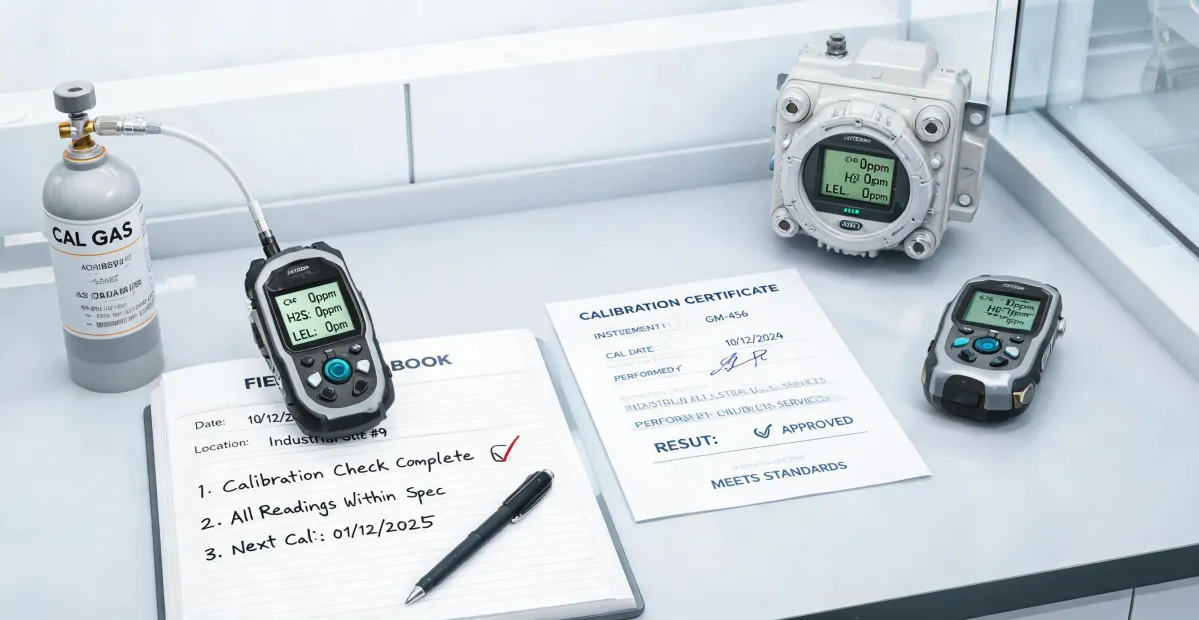
For anything that produces a number someone signs off on, I ask: How often does it need calibration, and can we do it in-house? A $7,200 Coriolis flow meter comes with a factory calibration certificate and holds accuracy for years. A $4,900 alternative might need annual recalibration at $400 a pop, plus two weeks of downtime while it's shipped out. Over five years, the "cheaper" meter costs more.
Same logic applies to calipers. Starrett vs. Mitutoyo is a real debate in our shop—both make reliable tools. Our lead inspector prefers Starrett because the dial reads better at an angle. The other inspector swears by Mitutoyo. What they both agree on: a $60 no-name caliper isn't in the same conversation. We bought one once. Read fine out of the box. Nine months later it was off by 0.002 inches. For our tolerances, that's scrap. $60 plus $400 in rejected parts is not a savings.
3. Can I get parts and support in under a week?
This one bit me with a thermal camera. We bought a Flir TG165-X MSX for our maintenance team—around $500. The MSX part matters: it overlays visible-light edges onto the thermal image, so you can tell what you're actually looking at. Our electrician uses it to check panel connections and motor bearings. First month, he found three loose lugs that would have caused a shutdown.
A cheaper thermal camera without that overlay? You get a blurry heat blob and a guess. I'm not saying the TG165-X is the fanciest option on the market. I'm saying the $200 camera that gives you a blurry square and no context isn't a tool. It's a toy.
4. What happens when this fails?
I ask myself this, not the vendor. For a $180 handheld oscilloscope, the answer is "we borrow one from the sister plant and lose half a day." For a Coriolis flow meter on a filling line, the answer is "we shut down production and lose $8,000 a shift." The stakes determine how much I'm willing to pay for reliability.
Where the cheap option is actually fine
Not every purchase needs a premium brand. I want to be clear about that.
Our maintenance team has a $40 multimeter for quick continuity checks. It works. For anything involving a panel schedule or a safety system, we use the calibrated one. Hand tools that don't measure anything—wrenches, screwdrivers, hammers—buy mid-range and move on. Anything that gets lost or borrowed and never returned, don't overspend.
But there's a line. On one side: things that create a number someone relies on. Flow meters, level transmitters, calipers, thermal cameras, oscilloscopes. On the other side: things that just need to exist. For the first group, look past the quoted price and ask what the total cost looks like over three years. The math is usually obvious once you do it.
This is based on my experience through early 2025. Instrument pricing and lead times shift constantly—verify current quotes before budgeting. And I'm not an engineer. If you need help specifying a Coriolis flow meter for a particular fluid, talk to someone who does that for a living.

Noura El-Sayed
Noura El-Sayed is an analytical and laboratory instrumentation analyst specializing in HPLC systems and columns, spectrophotometers, pH meters, pipettes, centrifuges, viscometers, and sample filters. She applies ISO 8655 liquid-handling methods and USP <621> chromatography principles while evaluating delivered volume, precision, flow accuracy, resolution, carryover, and detection limits. Her work helps laboratory managers and method developers select instruments, qualify workflows, and control sources of variability from sample preparation through analysis.
Leave a Reply