Why Your Endress+Hauser Mass Flow Meter Readings Drift (It's Rarely the Meter)
The complaint I keep hearing in Q1 2025
Twice last month I sat in on calls where a plant engineer opened with some version of the same sentence: "Our Endress+Hauser mass flow meter is drifting. Readings don't match the batch ticket." Both times, someone on the call was already drafting a replacement PO. Both times, the meter was fine.
I get why the meter is the first suspect. It's the expensive part, it's got the most electronics inside it, and the reading is the thing you can see going wrong. But after four years of running our incoming inspection and field verification protocol—roughly 340 instrument verifications annually since 2022—I've learned to look somewhere else first. The drift is usually real. The meter is usually not where it started.
The surface problem: readings that won't hold
Here's the pattern. A Coriolis meter gets installed on a new line, commissioned clean, and holds tolerance for six, maybe nine months. Then quality starts flagging intermittent offsets. The technician grabs a handheld and checks the 4-20 mA loop. Reading looks "close enough." So the meter gets blamed for long-term drift.
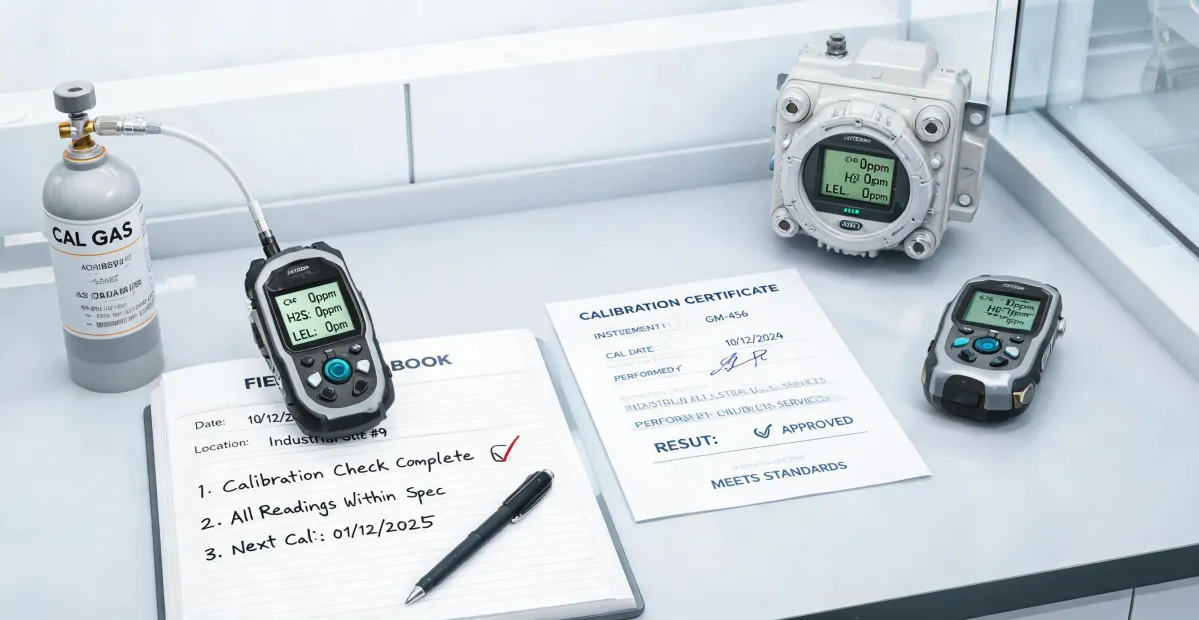
What almost nobody logs is the intermediate steps. Was the loop checked with a calibrated source? Was the junction box heat-scanned after the last enclosure change? Did anyone verify the transmitter's zero against an actual no-flow condition, or did they trust a dry calibration certificate from two years ago?
Most buyers focus on meter accuracy specs and completely miss the verification chain behind the reading. The datasheet tolerance on an Endress+Hauser mass flow meter is impressive—and also irrelevant if the loop it's talking through is compromised.
The deeper cause: your verification chain leaks before the meter does
I didn't fully understand this until a March 2023 audit. We pulled twelve meters from service for routine verification. Three had been flagged for "drift." When we traced the loop impedance, two of them were feeding a transmitter through a junction with a loose shield connection. The third had a span that had never been re-verified after a transmitter firmware update the previous November.
None of those are meter failures. All three were verification failures. And they cost us about $14,000 in unnecessary service hours and loaner units before we figured it out.
The uncomfortable part: the verification tools themselves are often the weak link, and this is where I see experienced techs get sloppy.
Point 1: A multimeter you haven't verified is an opinion, not a measurement
If you've ever watched someone check a 4-20 mA loop with an uncalibrated handheld and call it good, you know what I mean. Knowing how to read a Fluke multimeter correctly—range, burden voltage, true-RMS vs averaging on the AC side—matters, but none of it matters if the meter hasn't been through a calibration check this quarter. We now require a documented calibration sticker within 90 days on every Fluke used for loop verification. That single rule cut our false "meter drift" flags by roughly 60% between Q2 and Q4 2023.
Point 2: Thermal faults hide where the multimeter can't see
Electrical verification tells you the signal is present. It doesn't tell you the terminal block is running 18°C hotter than its neighbors because a lug wasn't torqued. That's the failure mode that shows up as intermittent drift six weeks later. Since we standardized on an E6 Pro handheld thermal imaging camera for post-installation scans on every flow loop enclosure, we've caught four loose terminations before they became batch failures. The camera doesn't diagnose the meter—it rules out the environment the meter is reporting through.
Point 3: The documentation trail breaks at the login screen
This one is unglamorous. When a meter gets flagged, the first thing I ask for is the commissioning record and any subsequent verification entries. Half the time, the technician can't produce them because the last person to touch the device used a shared login and never logged the verification step. If your team accesses the Endress+Hauser portal through a shared endress hauser login, you have no audit trail linking a specific verification to a specific instrument. We moved to individual named accounts in 2022 for exactly this reason, and it's the change I'd make first if I were starting over.
What this actually costs you
Let me put numbers on the pattern, because "verification discipline" sounds like a slogan until you see the invoice.
- False replacement cost: A premature swap on a mid-range Coriolis meter runs $8,000–$15,000 in parts plus 6–10 hours of technician time. We averaged 2.4 unnecessary swaps per quarter in 2022.
- Batch impact: When drift goes undetected because nobody verified the loop, you're releasing product against a reading you can't trust. Our worst event was 8,000 units held for re-test in October 2023—two days of production, roughly $26,000 in delay and rework.
- Warranty credibility erosion: Vendors start treating your claims as noise when half of them turn out to be loop issues. That means slower response on the claims that are real.
None of those costs show up in the meter's price sheet. All of them show up in your quarter.
The fix, and why I pay for certainty on it
Here's the short version, because the diagnosis is the hard part and the protocol isn't complicated.
- Verify the verification tools first. Calibration-dated multimeters only. If a Fluke hasn't got a current sticker, it doesn't touch a loop.
- Thermal-scan after every enclosure intervention. An E6 Pro scan takes under five minutes and catches the faults the multimeter structurally cannot.
- One named login per technician on the Endress+Hauser portal. No shared credentials, ever. The audit trail is the whole point.
- Require a no-flow zero check before any drift claim. If the zero is within tolerance, the meter is probably telling the truth and the loop isn't.
Does this add time to commissioning? Yes—about 40 minutes per loop. That's the premium I pay for certainty. In late 2024 we had a rush batch where a loop verification flagged a marginal junction temperature two hours before a deadline run. We replaced a $12 lug instead of a $14,000 meter, and we hit the ship date. That's not luck. That's the protocol working.
"The value of a verified reading isn't that it's faster. It's that you're not making a $14,000 decision on an unverified number at 11 pm."
To be fair, none of this is exotic. Every plant runs some version of it. The gap I see over and over is that the verification chain is treated as paperwork rather than as the actual measurement system, with the meter treated as the only instrument that matters. It isn't. It's the last node in a chain, and the chain is only as trustworthy as the tools and records behind it.
So before the next drift complaint escalates to a replacement, do me a favor: check the multimeter sticker, pull the thermal scan, and confirm the portal login. If all three come back clean, then—and only then—start looking at the meter.

Marcus Feld
Marcus Feld is an electrical test and measurement analyst specializing in multimeters, oscilloscopes, clamp meters, insulation testers, spectrum analyzers, and data loggers. He applies IEC 61010-2-030 and IEC 61010-031 concepts while examining measurement category, bandwidth, true-RMS response, input loading, and stated uncertainty. His work helps maintenance engineers and test teams choose safe instruments with performance suited to the signals and environments they actually measure.
Leave a Reply