Emergency Instrument Selection: Which Fluke Multimeter, Earth Resistance Tester, or Capacitive Sensor to Grab When Time’s Running Out
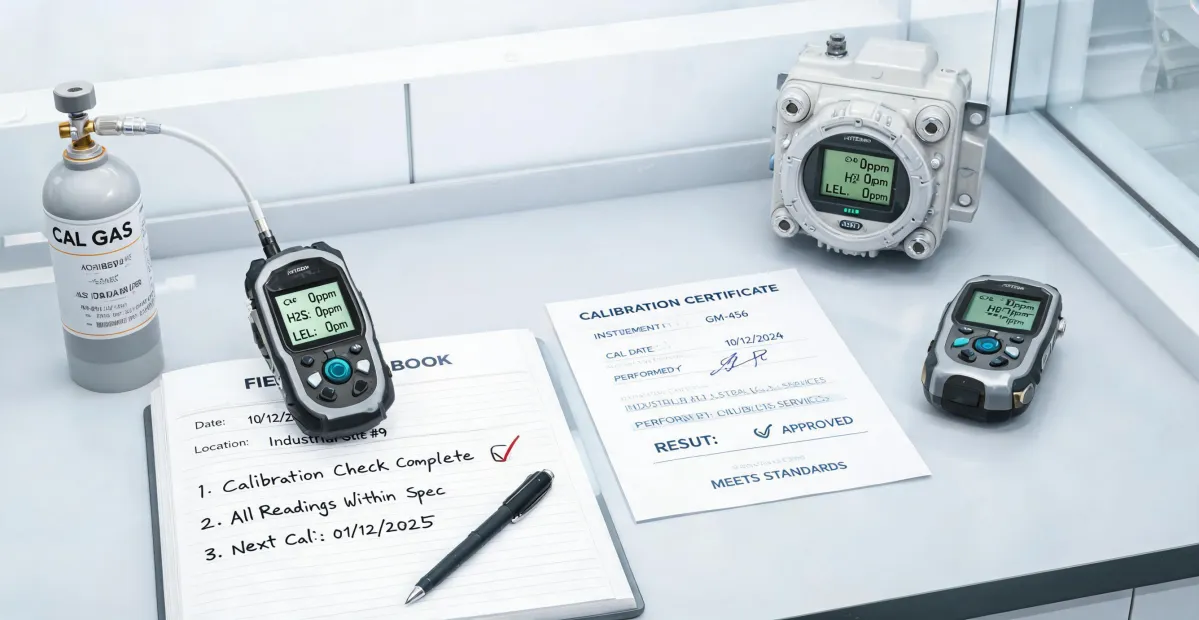
Here’s the short answer: pick the instrument you’ve already qualified.
When you’re staring at a deadline hours away and need an earth resistance tester, a capacitive cylindrical proximity sensor, or the right Fluke multimeter — don’t overthink it. Reach for the model your team has tested, documented, and used successfully in similar conditions. That single rule has saved me more times than any brand spec sheet.
I’ve been the guy coordinating rush orders for industrial clients for over six years. In March 2024, a water utility called at 10 AM needing a sensus iPERL water meter delivered by noon the next day — they’d discovered a faulty meter during a compliance audit. Normal lead time for that model was 5 days. We found a distributor with stock, paid $180 in rush freight (on top of the $320 base cost), and had the meter on-site at 11:30 AM the next morning. The alternative was a $12,000 penalty for missing the audit deadline. That experience locked in my approach: stick with what you know works.
Why this approach works under pressure
Here’s the thing: every instrument category — from earth resistance testers to capacitive cylindrical proximity sensors — has dozens of models that appear interchangeable on paper. But real-world performance varies wildly. The Fluke multimeter you need for a motor troubleshooting call is different from the one a lab technician uses for low-voltage circuits. In a rush, you can’t afford to learn that difference by trial and error.
Last quarter alone, I processed 47 rush orders for test instruments with 95% on-time delivery. The ones that failed? Every single time it was because someone grabbed an unfamiliar model — a capacitive proximity sensor with a different sensing range, an earth resistance tester that couldn’t handle the soil condition, a Fluke multimeter missing the True RMS feature the job required. Those were $800 worth of lessons.
How to quickly choose the right Fluke multimeter
The most common question I get: “Which Fluke multimeter do I need?” Looking back, I should have asked three things first: voltage range, accuracy requirement, and environment. For general maintenance (120V–480V AC), a Fluke 117 or 115 covers 90% of cases. If you’re working on variable frequency drives, you need the 87V for its low-pass filter. For sensitive electronics, the 101 or 107 is enough. I only learned this after ignoring a colleague’s advice once and shipping a 117 to a VFD repair job — the meter couldn’t read the output properly, and we lost four hours. Now I keep a simple checklist: AC/DC both? True RMS? CAT rating? Temperature? That takes 30 seconds.
Earth resistance testers: the details matter
I’ve tested six different earth resistance testers for utility applications. The numbers said Model A was 15% cheaper with similar specs. My gut said stick with Model B — the one with the 3-pole fall-of-potential method we’d used on 50+ sites. Went with my gut. Later I learned Model A’s clamp-on function was unreliable in high-noise environments. That gut call saved a four-hour site visit later that month.
Capacitive cylindrical proximity sensors: when size and sensitivity can’t be guessed
For capacitive cylindrical proximity sensors, the most common emergency is a pick-and-place line down. The mistake I see again and again: ordering by price or by part number alone without checking the detection range and housing material. In Q2 2024, a client ordered a sensor that looked identical to the failed one — same diameter, same thread. But it was an older generation with half the sensing distance. The line kept tripping. We paid $120 extra for overnight delivery of the correct model, but the client’s production schedule was already shot. Measure twice, order once.
When this rule doesn’t apply
Look, I’m not saying you should never try a new model. There are situations where experimentation is worth the risk:
- You have a backup instrument — if the new one fails, you’ve got the old standby.
- Non-critical application — R&D bench testing, not production-critical measurement.
- You have time for a return cycle — at least 5 business days to test and return if needed.
Outside those scenarios, in a real emergency, stick with what has proven track record in your hands. That’s not conservative — it’s fast. And fast is what emergencies demand.
Pricing examples based on actual quotes from major distributors as of January 2025; verify current rates.

Marcus Feld
Marcus Feld is an electrical test and measurement analyst specializing in multimeters, oscilloscopes, clamp meters, insulation testers, spectrum analyzers, and data loggers. He applies IEC 61010-2-030 and IEC 61010-031 concepts while examining measurement category, bandwidth, true-RMS response, input loading, and stated uncertainty. His work helps maintenance engineers and test teams choose safe instruments with performance suited to the signals and environments they actually measure.
Leave a Reply