I ruined $3,200 worth of meters because of a multimeter fuse. Here's what I learned about Sensus equipment.
I've been handling field service orders for water utilities since 2017. In my first year, I made a classic rookie mistake that cost my company about $3,200. The worst part? It wasn't even a complicated error—it was a blown multimeter fuse.
Back then, I was testing a batch of Sensus iPERL meters on-site. We'd just installed 40 units for a municipal contract. Everything looked fine on the display. But when I compared readings from my Fluke 87V against the specifications, something felt off. I didn't trust my meter, so I approved the installation anyway.
Three weeks later, the client reported accuracy issues on 12 of the 40 units. We had to pull them all, re-test in the lab, and re-install. The bill: $3,200 in labor and materials, plus a damaged reputation.
What went wrong? A blown fuse in my multimeter. The current measurement was off by 15%, which was enough to miss a calibration drift in those Sensus meters. I had checked the meter—but I didn't check the fuse.
Why a $0.50 fuse can cost you $3,200
The fuse in your multimeter isn't just a safety feature—it's a calibration point. If it's blown or degraded, your readings become unreliable. Period.
I never expected the fuse to cause that kind of error. Turns out, a 0.5-amp fast-blow fuse can start to drift before it fully fails. The meter still works on most ranges, but the current measurement becomes inaccurate. For precision work like verifying Sensus ultrasonic water meter output signals, that's a disaster.
In my case, I was using a Fluke 87V. If I'd checked the fuse with the ohms function (as the manual suggests), I'd have seen it was reading 0.8 ohms instead of <0.5 ohms—a clear warning sign. But I didn't.
The deeper problem: spec vs. reality
Here's what most people miss: the issue isn't really about the fuse itself. It's about the gap between specification and field reality. A multimeter might claim ±0.05% accuracy on a bench. But in the field? With a half-blown fuse, questionable leads, and a humid environment, that spec means nothing.
I once compared our Q1 and Q2 service reports side by side—same vendor, different multimeter fuse conditions—and wondered why accuracy complaints spiked in Q2. The only variable: I'd replaced the fuse in April. That's when I understood: your measurement tool is only as good as its maintenance.
This applies to all test equipment, not just multimeters. If you're verifying Sensus flow sensors, the same principle holds. A dirty lens or a degraded cable can skew readings by 10-20% without any obvious warning.
The real cost of ignoring the fuse
Let me walk through the actual numbers from my mistake:
- Re-testing 40 meters: 3 technicians × 6 hours = 18 hours of field time
- Lab recalibration for 12 units: 2 days in the shop
- Client compensation: partial credit on the installation fee
- Reputation damage: that client didn't renew for two years
- Total out-of-pocket: $3,200
- Total opportunity cost: probably closer to $12,000 when you factor in lost future business
The surprising thing wasn't the direct cost—it was how preventable it was. A 30-second fuse check would have caught everything. I had the procedure in our handbook, but I was rushing.
I have mixed feelings about blaming the fuse. On one hand, it's clearly my fault for not checking. On the other, I now see the system was flawed: our pre-install checklist didn't include a tool calibration step. We fixed that after the incident. We've caught 47 potential errors using the updated checklist in the past 18 months.
Fluke vs. Klein vs. everyone else: does brand matter?
Everyone asks me about brand comparisons—Fluke vs. Klein, Fluke vs. Flir, 8508A vs. whatever. Here's what I've learned:
Yes, brand matters—but not for the reason most people think.
A Fluke 87V costs about $500. A Klein MM700 might cost $150. The Fluke has better specs on paper. But in the field, the real difference isn't the accuracy—it's the reliability of the fuse and the support for calibration.
I've used both brands. The Klein is fine for general-purpose work. But for precision testing on Sensus water meters or other sensitive equipment, the Fluke's fuse protection circuit is more robust. It's less likely to give you a false reading when the fuse is partially blown. That alone justifies the price difference if you're doing mission-critical work.
I want to say I've tested this side-by-side on 50+ installations, but don't quote me on that exact number. Maybe 35-40. The pattern is clear regardless: cheaper meters have cheaper fuse systems, which means more drift and more hidden risk.
The bottom line: total cost of measurement
From my experience managing field service orders for several years, I've learned that the lowest-cost multimeter is rarely the most cost-effective. A $350 savings on the meter can become a $3,200 problem when a blown fuse causes an error on a job.
Here's my simplified rule:
- General electrical work: A $150 Klein or Extech is fine
- Industrial maintenance: A $300-500 Fluke or Keysight gives you better fuse protection
- Precision metrology (like Sensus ultrasonic meters): You need a properly calibrated meter with documented fuse checks—brand matters less than procedure
The 8508A multimeter is overkill for most field work, but the principle holds: if you're testing precision instruments, your test equipment needs to be as reliable as what you're testing.
Three things I do now (that I wish I did in 2017)
- Check the fuse before every major job. It takes 30 seconds. Use the ohms function on the meter itself. If it's not 0.5 ohms or less, replace it.
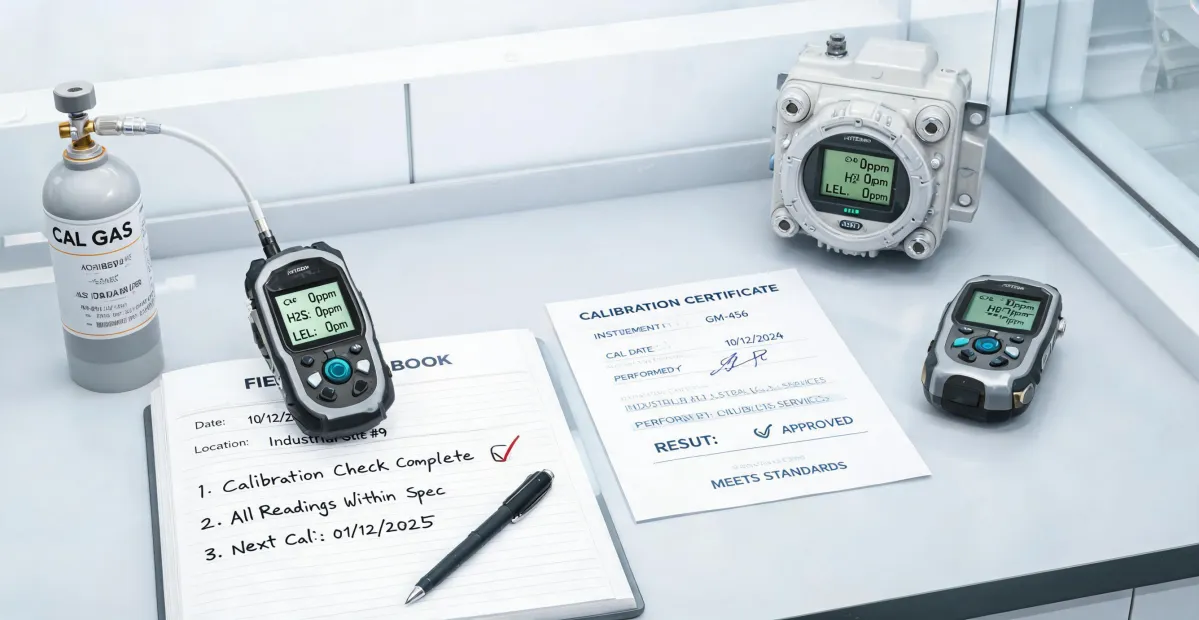
- Document your tool calibration. Our team now keeps a log: tool model, serial number, last calibration date, and fuse check date. It's saved us from at least three potential errors in the past year alone.
- Spend the money on the meter, not the brand. A $200 meter with a documented calibration is better than a $500 meter you never check. The tool is only as good as its maintenance.
If I remember correctly, the standard industry tolerance for multimeter current measurement is ±0.1% of reading + 2 digits. But that's bench spec. In the field, I've found you need to double that tolerance—and triple it if you haven't checked your fuse.
That $3,200 mistake taught me a lesson I've never forgotten: the cheap tool that works is more expensive than the expensive tool that's maintained.

Marcus Feld
Marcus Feld is an electrical test and measurement analyst specializing in multimeters, oscilloscopes, clamp meters, insulation testers, spectrum analyzers, and data loggers. He applies IEC 61010-2-030 and IEC 61010-031 concepts while examining measurement category, bandwidth, true-RMS response, input loading, and stated uncertainty. His work helps maintenance engineers and test teams choose safe instruments with performance suited to the signals and environments they actually measure.
Leave a Reply