Sensus Handheld Water Meter Reader: What I Learned Buying One (And Why the Dealer Matters More Than the Device)
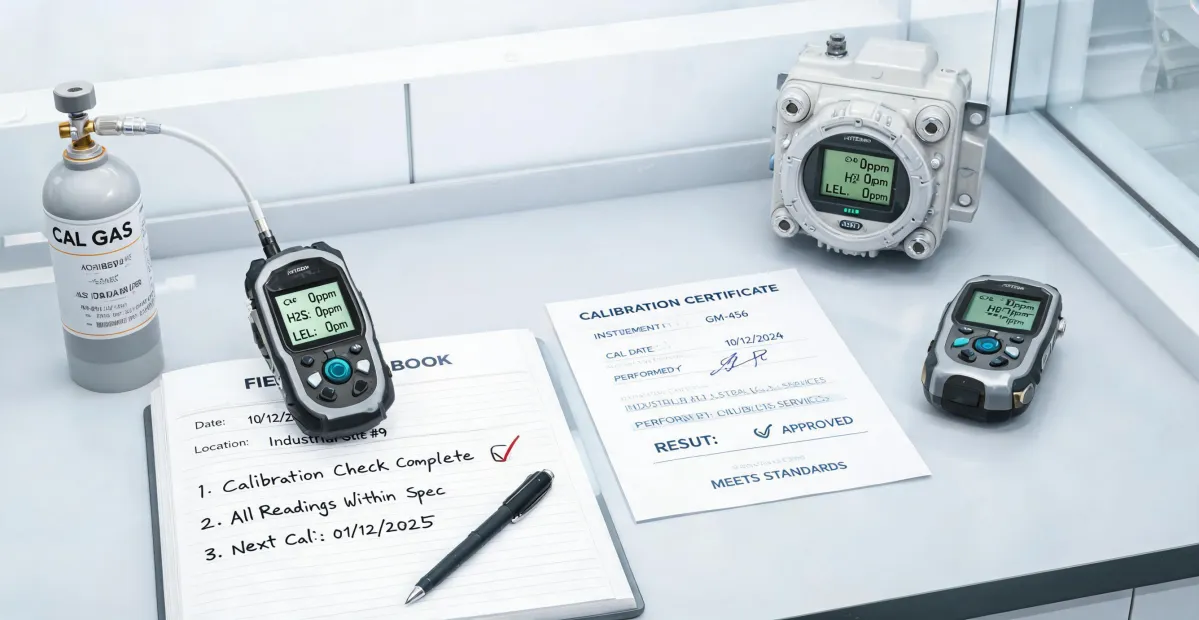
Here's the short version: the dealer you buy a Sensus handheld water meter reader from is often more important than the reader itself. The right authorized dealer will ask about transponder models, RF frequency, and meter protocol before quoting. The one that only asks about payment will leave you with a shelf of expensive paperweights.
I'm the office administrator for a 160-person utility and facilities company. I manage purchasing across operations, maintenance, and a small lab—roughly $300,000 in annual orders spanning 9 vendors. I process 60–80 purchase orders a year, and I report to both operations and finance. My job is not to design meter networks or repair chromatographs. It's to make sure the people who do those jobs have the right equipment, the right documentation, and the right supplier behind it. I started this role in 2020, and I've made enough ordering mistakes to know what matters.
Before You Buy a Sensus Handheld Water Meter Reader
The first thing to understand is that 'Sensus' is a name on a lot of things: water meters, smart metering, transponders, radio modules, software, and the handheld readers that field staff use to collect reads. You can't just search for a generic reader and hope it works. In our case, we have a mix of iPERL and OMNI meters. I learned—after almost ordering the wrong unit—that the handheld has to match the reading system in the meter. That sounds obvious, but it's easy to overlook when a sales page says 'Sensus compatible.'
This is where a little self-education helps. Ask the dealer: which meter models does this reader support? Does it communicate with touch read, radio read, or both? What firmware do the meters need? A real dealer will answer with specifics or send a compatibility sheet. A reseller that dodges the question should be crossed off the list.
I nearly ordered the wrong unit because I assumed one Sensus handheld reader would read every Sensus meter. It won't. No, wait—it can read the ones it's designed for, but that's not every meter in the field. The difference between the right reader and the wrong one cost a neighboring utility about 30 hours of field time plus a re-tooling order. We avoided that because our dealer asked us to pull meter IDs from a few pit lids before the PO.
Why Sensus Water Meter Dealers Matter More Than You'd Think
There's an old belief that 'local is always faster and safer.' That thinking comes from an era when product support had to be close because specs and diagnostics weren't easy to share. Today, the fundamentals haven't changed, but the execution has transformed. A good dealer might be across the country. A bad local reseller can be right next door and know even less than you do.
Sensus is now part of Xylem, and as of January 2025, Sensus water meter dealers are not all the same. The word 'dealer' doesn't tell you whether they've been authorized by Sensus/Xylem or whether they're just reselling surplus meter parts. That distinction matters for firmware updates, warranty support, replacement parts, and the ability to troubleshoot a reader that comes back from the field in February.
In our 2024 vendor consolidation project, I narrowed eleven potential suppliers down to three. The cheapest quote was $680 lower than the authorized dealer for the same handheld reader model. But the cheap quote didn't include the radio module configuration we needed, and they couldn't tell us whether the reader could join our existing RF network. The authorized dealer wasn't the cheapest on paper. The total cost of ownership was still lower because their quote actually matched our meter population.
So glad I asked for references before we sent a deposit. I was one email away from ordering from the discount reseller, which would have meant a reader that couldn't talk to our iPERL meters and a procurement mistake that would have shown up in my monthly report to finance.
The Supporting Tools That Often Slip Into the Same Orders
Once the metering side is sorted, the maintenance and lab teams usually add a few other items. These three categories show up in our purchase history more than you'd expect: HVAC multimeters, thermal cameras, and HPLC troubleshooting supplies. They're not water metering tools, but they live in the same budget cycle.
HVAC multimeter: buy the right safety rating, not just a bigger screen
For rooftop units and air handling, the request typically comes through as 'an HVAC multimeter with amp clamp and thermocouple.' The practical choice is a true RMS meter with a CAT III rating and a temperature measurement function. You don't need the $400 flagship with a professional calibration report. You do need a meter with replaceable leads, a backlit display, and a magnetic hanger. We standardize on a $120–$150 class meter. The $20 no-name meter is a false economy; it often has weak leads and unreadable buttons after one summer of roof work.
How does FLIR thermal camera work? Simply put, it sees heat
I get asked this every time we add a thermal camera to a work order. How does FLIR thermal camera work? It detects the infrared energy that every object releases, converts that energy into a temperature value, and then paints a false-color image where warm and cool areas are visible. The camera's detector is calibrated to translate energy differences into a thermal image. That's why a thermal camera can show a warm electrical connection or a cold pipe behind a wall—it's not X-ray vision, and it can't see through drywall. It sees the temperature on the surface.
For a facilities team, a basic FLIR camera is useful for water leak investigations, overloaded circuits, and missing insulation. For field metering, it's less useful. Don't buy a $5,000 thermal imaging tool if all you need is a $150 non-contact thermometer. The camera only gives you a condition snapshot; you still need the electrical or HVAC expertise to interpret it.
HPLC troubleshooting is as much about procurement as chemistry
The lab team used to call vendor support every time an HPLC pressure fluctuated. Over time, I learned that hplc troubleshooting is often a paper problem before it's a hardware problem. Recurring issues—baseline noise, high back pressure, retention drift—are frequently traced to empty solvent reservoirs, dirty frits, or expired consumables. Those can be solved by a good preventive maintenance schedule and a stocked set of spares.
My role is to buy the right support contract and the right documentation. An instrument service contract with a defined response time costs more upfront, but it's cheaper than an unplanned repair visit. If you're an admin buyer, ask your lab manager: what are the top three hplc troubleshooting issues per month? Buy those consumables and the service plan, and you'll cut most of the after-hours drama. That advice came from one of our analysts, not from the vendor.
Where I'd Add a Caution Note
Every tool has limits. A Sensus handheld water meter reader is designed for specific communication modes and meter generations. It is not a guarantee that every meter in every pit will respond on the first pass. A thermal camera doesn't replace a clamp meter, and a clamp meter doesn't replace the manufacturer's manual. The same point applies to Sensus water meter dealers: an authorized dealer is not the only option, but it's the one where you have the clearest recourse if something doesn't work.
As of January 2025, prices for Sensus readers and supporting instruments have moved around enough that I won't quote exact figures here. Verify current pricing at the Sensus/Xylem dealer directory or your preferred distributor. The fundamentals haven't changed: stock the right tool, confirm compatibility before purchase, and keep the documentation where your technicians can find it.
Buying for a technical company is part detective work, part budgeting. The good news is that the basics stick: ask the vendor for proof, test the workflow, and don't let a low quote write the spec.

Marcus Feld
Marcus Feld is an electrical test and measurement analyst specializing in multimeters, oscilloscopes, clamp meters, insulation testers, spectrum analyzers, and data loggers. He applies IEC 61010-2-030 and IEC 61010-031 concepts while examining measurement category, bandwidth, true-RMS response, input loading, and stated uncertainty. His work helps maintenance engineers and test teams choose safe instruments with performance suited to the signals and environments they actually measure.
Leave a Reply