Why I Don't Buy on Price Alone: A Quality Inspector's Case for TCO in Test & Measurement
The cheapest quote isn't the cheapest purchase
I'm a quality and brand compliance manager at a test & measurement instruments company. I review every product spec sheet and supplier quote before it reaches our customers—roughly 250 unique items a year, give or take. And I've rejected about 6% of first deliveries in 2024 for spec deviations that would have been invisible to a buyer who only looked at the price tag.
My view: if you're buying a digital caliper or a thermal imaging camera based on who offers the lowest number, you're probably overpaying.
Let me explain why I think total cost of ownership—TCO—is the only honest way to compare instruments. I'm not a procurement specialist, so I can't speak to enterprise contract negotiation. What I can tell you from a quality perspective is how hidden costs stack up when you ignore everything but the unit price.
What most buyers miss when comparing quotes
The $200 caliper that cost $350
A few years ago—2022, I think—we needed 150 digital calipers for a production line. We got three quotes:
- Vendor A: $199 per unit, 4-week lead, no NIST-traceable cert included (extra $28 each)
- Vendor B: $249 per unit, 2-week lead, cert included
- Vendor C: $310 per unit, in stock, cert included, with a known brand
The purchasing manager wanted Vendor A. Lowest price, obvious choice, right? But when we factored in the cert ($28 × 150 = $4,200), the rush shipping because 4 weeks wasn't fast enough (about $400), and the fact that 11 units out of the box had measurement drift outside our ±0.02 mm tolerance—which meant 11 replacements plus return shipping—the total came to about $356 per unit.
Vendor B's total? $249 each. No extras. No rework. No delay. Vendor A's 'cheaper' option was actually $107 more per unit once we counted everything.
That's the thing about TCO: the base price is the tip of the iceberg. The hidden part includes setup fees, cert costs, shipping surcharges, inspection time, and the risk of rejects. On a 50,000-unit annual order, even a small percentage of failures adds up fast.
Thermal cameras and the spec gap
I've seen the same pattern with thermal imaging cameras. A brand like Flir or Fluke—I respect both, we don't compete with either—might quote $1,500 for a reliable unit. A lesser-known option might be $900. But when you compare the spec sheet side by side, the $900 unit often has:
- Lower thermal sensitivity (NETD spec), meaning it misses small temperature differences
- No radiometric data export, which matters if you need reports for compliance
- Less durable housing in industrial environments
If you're using that camera for preventive maintenance in a factory, the cheaper unit might miss an overheating panel that the $1,500 camera would catch. That missed detection could cost far more than the $600 you saved. But you won't see that cost on the invoice.
The myth of 'good enough' specs
There's a persistent idea in industrial buying that 'all brands meet the same standards.' This was maybe true 15 years ago—or rather, closer to 20—when most instruments were built to conservative specs. Today, the gap between 'meets the standard' and 'meets the real-world need' can be significant.
I've seen a digital micrometer with a stated accuracy of ±0.001 mm that drifted after 500 uses because the internal mechanism was plastic where it should have been metal. The manufacturer claimed it met ISO 3611. Technically true. But in practice? We had to recalibrate it every two months. A Mitutoyo equivalent—around $80 more—held calibration for over a year in the same conditions.
The '$80 more expensive' option was cheaper in the long run. The 'industry standard' argument doesn't account for how long the instrument stays within spec under actual use.
What I look for when evaluating instruments now
After a few years of this, I've developed a simple checklist. It's not comprehensive, but it catches the most common hidden costs:
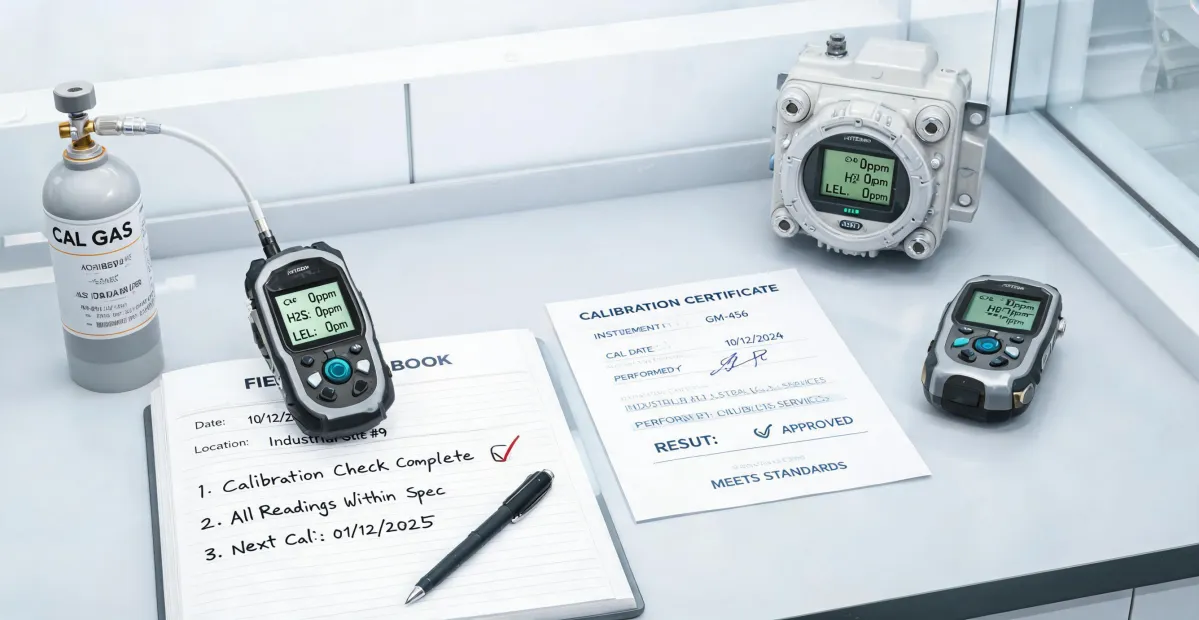
1. Calibration and certification
Does the quote include NIST-traceable calibration? If not, add it yourself—typical cost is 15-30% of the instrument price for a cert that's valid one year. On a large order, that's real money.
2. Lead time variability
A 4-week lead might stretch to 6 weeks. If your project depends on that instrument, the delay cost could be substantial. I now ask vendors for their on-time delivery rate, not just their estimated lead time.
3. Failure rate in the first year
I run blind tests sometimes: same instrument from two brands, 50 units each, measured weekly for three months. In one test, Brand A had 4% failure rate, Brand B had 12%. The cost of a failed unit goes beyond replacement—it includes downtime, re-inspection, and paperwork. On a 200-unit order, that's 24 potential failures vs. 8. Calculate the risk.
4. Availability of spare parts and support
Some budget brands offer no repair service—you replace the whole unit. That might work for a $30 caliper, but for a $2,000 thermal camera? A known brand that offers sensor replacement at $300 is cheaper than buying a new camera at $2,000.
But what about strict budget constraints?
I know what you're thinking: 'All this is fine if you have the budget. But sometimes you just need the cheapest thing that works.'
I get that. I've been in meetings where the purchasing director said we had $500 per unit and no flexibility. In those cases, you work with what you have. But even then, I'd argue that knowing the TCO helps you choose the least-bad option. If you have to pick between two $500 options, one with a $50 cert fee and one with a $80 cert fee, that's a real difference on volume. Or if one has a higher failure rate, you can budget for replacements in advance.
The danger isn't buying cheap when you have to—it's thinking you got a deal when you didn't. The $500 quote that turns into $750 after certs, shipping, and one replacement? That's not a deal. That's a misinformed decision.
My bottom line
I don't believe the lowest quote represents the lowest cost. In test & measurement, where accuracy and reliability directly affect your product quality, buying on price alone is a gamble. A calibrated Fluke or Mitutoyo unit—both companies I respect, by the way—might cost more upfront, but when you add up certs, longevity, and failure risk, it's often the cheaper choice over 3-5 years.
This isn't about premium brands being always better. It's about doing the math. Next time you compare quotes, include the hidden costs. That exercise alone might change your vendor list. It changed mine.

Marcus Feld
Marcus Feld is an electrical test and measurement analyst specializing in multimeters, oscilloscopes, clamp meters, insulation testers, spectrum analyzers, and data loggers. He applies IEC 61010-2-030 and IEC 61010-031 concepts while examining measurement category, bandwidth, true-RMS response, input loading, and stated uncertainty. His work helps maintenance engineers and test teams choose safe instruments with performance suited to the signals and environments they actually measure.
Leave a Reply