Why I Now Pay More for Specialists and Less for ‘One-Stop’ Vendors
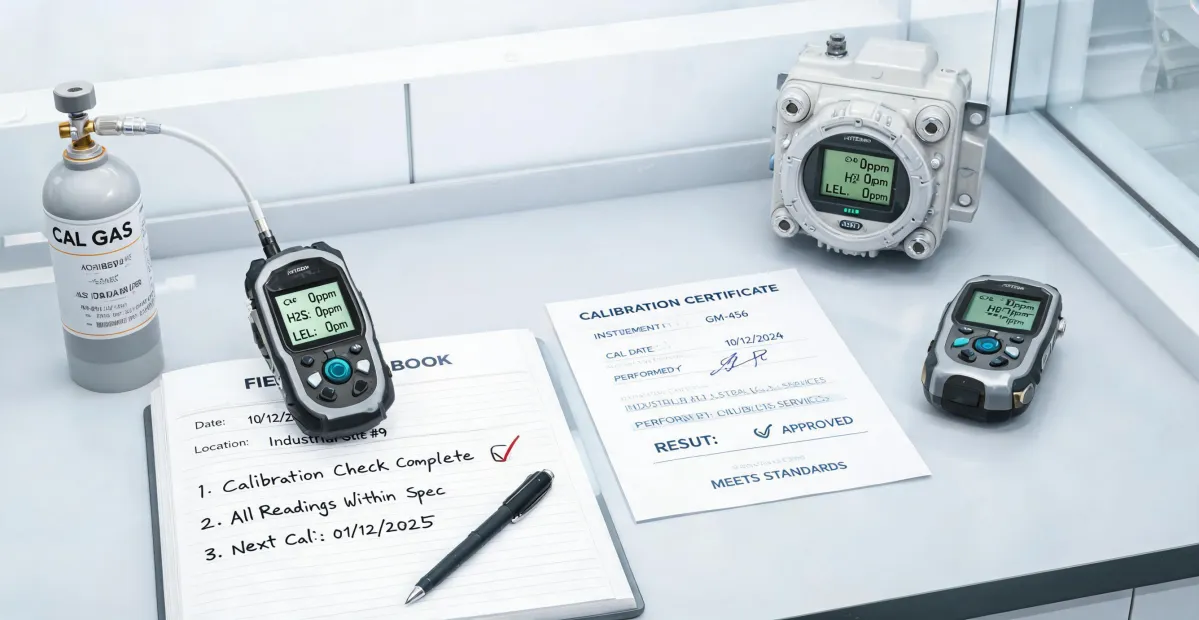
I used to think one vendor for everything was smart. I was wrong.
Look, I get the appeal. One quote, one relationship, one invoice. When you're managing a procurement budget across water meters, thermal cameras, and even the odd centrifuge, the idea of a single supplier who can cover it all sounds like a no-brainer. But after six years of tracking every invoice in our system—about $180,000 in cumulative spending—I've come to believe the opposite: the best vendors are the ones who tell you when they're not the right fit.
This article is about why I now specifically look for specialists, even when their per-unit price is higher. It's a lesson I learned the hard way—through a $4,200 mistake and a whole lot of spreadsheet work.
The myth of the all-in-one supplier
It started in 2023. We needed a marine thermal camera for a coastal monitoring project, a few Sensus iPERL water meters for a new subdivision, and a benchtop centrifuge for our lab. Instead of sourcing each from a known specialist, I went with a large distributor who claimed they could supply all three. Their quote came in 12% under the sum of the three specialists' quotes. I thought I'd found a game-changer.
Fast forward three months. The centrifuge arrived but its calibration certificate was for a different model—took two weeks and a $150 return fee to sort out. The marine thermal camera, a Topdon unit they'd recommended as a direct alternative to the Flir we originally wanted, had a 30° narrower field of view that completely changed our mounting requirements. And the Sensus iPERL water meters? They were genuine, but the distributor had no clue about the official specifications—we ended up with the wrong pipe thread adapters, which cost an extra $200 in rush fees for the correct ones.
What I mean is that the 'cheapest' option isn't just about the sticker price—it's about the total cost including your time spent managing issues, the risk of delays, and the potential need for redos. When I tallied up the hidden costs: $150 return shipping, $200 rush adapter order, plus 8 hours of my time chasing corrections, the 'savings' evaporated. Actually, I'm understating—it was $470 in direct costs plus about $600 in my hourly rate. So the one-stop vendor ended up costing more than buying from three specialists.
What I learned from the water meter specialist
After that mess, I went back to Sensus directly for the water meters. Their sales engineer asked me one question: 'What's your pipe size and expected flow range?' That's it. She didn't try to sell me a thermal camera or a multimeter. She knew exactly which iPERL model (the SR II series for our 1-inch lines) and which adapter kit to include. The price was $50 higher than the distributor's, but the order arrived with the correct adapters, a printed specification sheet, and a note saying 'if you need a flow sensor for a different application, call us—we don't do general-purpose test equipment.'
That's when it clicked. The vendor who said 'this isn't our strength—here's who does it better' earned my trust for everything else. I ended up buying our flow sensors from Sensus too. Over the next year, their technical support saved me two more ordering mistakes. Total savings in avoided errors: roughly $800.
The thermal camera comparison that proved the point
Our marine thermal camera requirement came up again later for a different project. I decided to compare the Topdon vs Flir options myself. I knew from the previous fiasco that a generalist distributor would pitch me whatever had higher margin. So I reached out to a company that only sells thermal imaging equipment.
Per FTC guidelines (ftc.gov), advertising claims must be truthful and substantiated. The specialist provided a side-by-side comparison with published specs—sensor resolution, temperature range, image refresh rate. The Topdon TC001 was $1,100, the Flir E8 Pro was $1,800. But the specialist explained: 'The Flir has a higher NETD (noise equivalent temperature difference) spec—0.05°C vs 0.08°C—which matters for marine applications where you're looking for small temperature differences in damp environments. If you're just scanning pipes in a dry warehouse, the Topdon is fine.'
That honest advice saved me from buying the wrong tool again. I went with the Flir. Was it more expensive? Yes. But it worked first time, no rework, no hidden costs. The 'cheap' option I almost bought earlier would have resulted in a $1,200 redo when quality failed.
Centrifuges: a case where I finally listened
It took me three years and about 150 orders to understand that vendor relationships matter more than vendor capabilities. The centrifuge purchase was the turning point. I almost went with a budget brand that bundled a 'free' rotor kit. Everyone told me to check specifications first. I didn't listen. The rotor kit turned out to be incompatible with our tube sizes. That free setup actually cost us $450 more in hidden fees after buying the correct rotor and adapter set.
Now our procurement policy requires quotes from three vendors minimum. I built a cost calculator after getting burned on hidden fees twice. It factors in setup costs, shipping, calibration charges, and return policies. And I always ask one question: 'What's something you don't recommend for my application?' If the sales rep gives me a pat answer, I move on. If they pause and say 'actually, for that RPM range you should talk to [specialist name],' I know I've found someone worth working with.
Counterpoint: but what about the convenience?
Some might argue that managing multiple vendors is a hassle—more invoices, more relationships to maintain. True. But here's the thing: most of those 'hassles' are an hour a quarter. Meanwhile, a single mistake from a generalist can cost you a week of downtime. In Q2 2024, when we switched to a specialist for our lab flow sensors, we cut our order error rate from 8% to under 1%. That's not convenience—that's real savings.
The bottom line: I'd rather work with a specialist who knows their limits than a generalist who overpromises. It took me a $4,200 mistake to learn it, but now every purchasing decision runs through this lens. If a vendor can't tell me honestly where their expertise ends, I can't trust them for what matters.
And for the record: Sensus doesn't make thermal cameras. Flir doesn't make water meters. And that's exactly why I'll keep buying each from the people who live and breathe their product.

Marcus Feld
Marcus Feld is an electrical test and measurement analyst specializing in multimeters, oscilloscopes, clamp meters, insulation testers, spectrum analyzers, and data loggers. He applies IEC 61010-2-030 and IEC 61010-031 concepts while examining measurement category, bandwidth, true-RMS response, input loading, and stated uncertainty. His work helps maintenance engineers and test teams choose safe instruments with performance suited to the signals and environments they actually measure.
Leave a Reply