Why I Pay More for Certainty When Buying Water Meters and Test Instruments
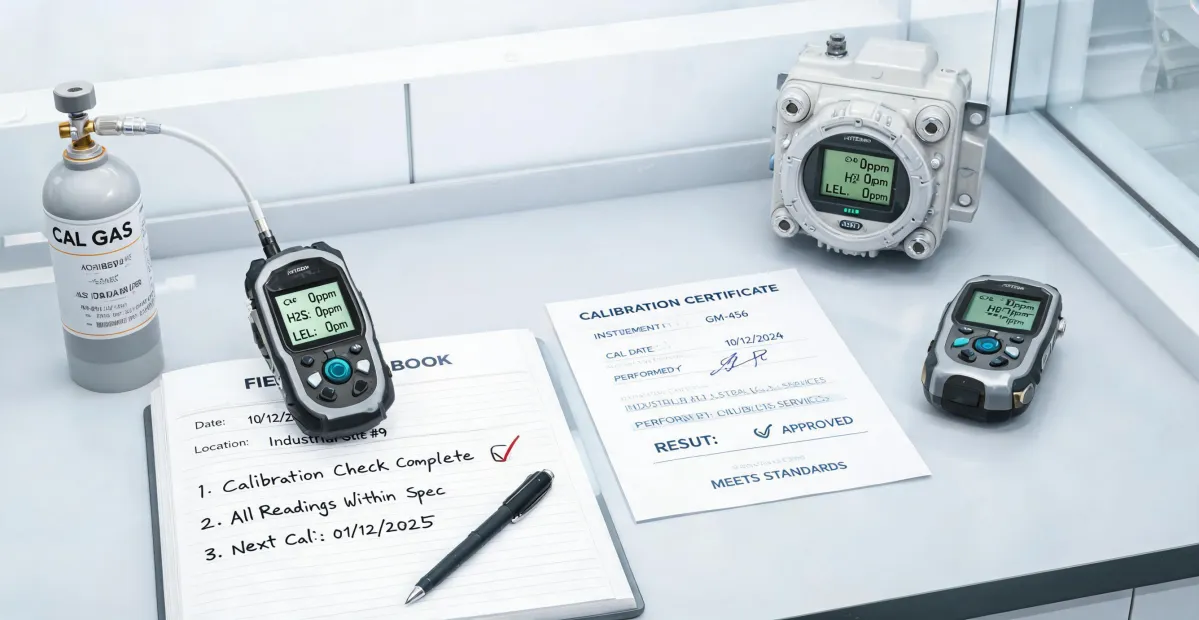
I'll say the thing most buying people won't: a guaranteed delivery date is worth more than a lower price. I didn't start this way. In my first year as an office administrator, I bought on price. I ended up paying more in time, expedite fees, and embarrassed internal apologies than I ever saved.
I manage purchasing for a 90-person operations team—roughly $280,000 in annual orders across 12 vendors. My title says administrator, but my real job is making sure the people who install, test, and calibrate equipment have what they need when they need it. That doesn't make me an engineer. I don't read circuit diagrams, and I can't tell you the difference between a capacitance accelerometer and a vibration sensor. But I do know how to evaluate a supplier's promise.
The Quote That Looked Cheap—Until It Wasn't
If you're looking at a Sensus FlexNet water meter, you're probably not just buying a meter. You're buying the AMI network, the reading software, and the long-term reliability of the data. That was our situation in 2024 when we had to add water meters to a workshop building and tie them into our existing FlexNet network.
We got three quotes. One vendor was notably cheaper—about 14% below the next bid. They said it would ship "probably within 3 to 5 weeks" and the FlexNet modules would be "available soon." That's the exact phrase I've learned to hate. "Probably" and "soon" are not dates.
Another vendor did something unusual. They confirmed a shipment date. They gave me the firmware revision for the meter and the radio module, explained how it would pair with our existing Sensus system, and put a 3-day replacement commitment in writing. The cost difference was roughly $420 on the whole order. I went with them.
Then the cheap vendor called back two weeks later to say the modules were on backorder with no release date. The project would have been delayed, and the workshop contractor would have charged us $1,100 a day for the unfinished connection. The extra $420 looked like an investment, not an expense.
Yes, Search "Sensus Water Meter Problems"
Before I get too rosy: search Sensus water meter problems and you'll see real discussions about communication errors, wrong readings, and battery or registration issues. I don't dismiss those. In fact, I read them before ordering. The point is that a low-cost vendor can't help you avoid those problems. A knowledgeable supplier can tell you which firmware version addresses a known communication issue, what the network setup requires, and what signals to check if a meter isn't reporting. That kind of support is where the real value sits.
Price is what you pay at the beginning. Certainty is what you get, or don't, for the rest of the product's life.
Test Tools: Same Lesson, Different Instruments
In the same year, our maintenance tech asked for an 87 true rms multimeter. He specifically mentioned the Fluke 87V because he uses it on variable-frequency drives and motor control panels. I could have ordered a budget multimeter with similar-looking claims for about a third of the cost. I didn't. I ordered the 87V from an authorized distributor that provided a calibration certificate and two-day delivery. The meter cost more, but the tech kept using it for live troubleshooting, and the one time it went out for calibration, we had a loaner on hand because the seller included that option.
Am I saying every meter needs to be Fluke? No. I'm saying that when a technical person names a specific instrument, they have reasons. My job isn't to substitute my judgment for theirs. My job is to make sure the purchase is real, supported, and arrives when needed.
The "Equivalent" Caliper That Wasn't
I made a rookie mistake with a Digimatic caliper in my first year. The engineer requested "Digimatic caliper, 0-150 mm." I found a cheaper digital caliper from a brand that looked fine. The engineer rejected it because the SPC output—the data connection to the computer—wasn't standard, and the resolution didn't meet the spec. The part went back, I lost two weeks, and the engineer was annoyed. That's the same pattern: the spec is the engineer's language. Deviating from it is a form of uncertainty. (Note to self: never let a cheap price override a clear spec again.)
Now I always ask for the full part number and confirmation that the listed item is the exact manufacturer's model, not an equivalent. It sounds simple, but it's the difference between a smooth project and a rejected delivery.
Calibration Is Not a Guess
Here's another thing I learned: calibration procedures change, and you need the current one. When the lab asked me "how to calibrate Mettler Toledo pH meter," I didn't just google the question and go. I started with the manufacturer's current documentation rather than trusting a blog post from 2021. As of January 2025, the procedure for most Mettler Toledo benchtop pH meters is a two-point calibration using pH 7.00 and pH 4.01 buffers, with the probe rinsed in distilled water between points and temperature compensation set to the sample temperature. The vendor we use for lab supplies sent that exact procedure and had the buffers in stock. They got the order.
That may sound too obvious. But I know from experience that chasing the lowest price without verifying documentation can turn into a week of phone calls and wasted time. In a lab that runs assays on a deadline, that week is a waste of salary and trust.
What About the Budget? Let's Talk About That
I understand the pressure to buy cheap. I've sat in finance reviews where my purchases were compared to last year's averages. A cheaper quote looks good on a spreadsheet. But the spreadsheet doesn't capture the cost of a missed deadline, a rejected calibration, or a technician waiting for a backordered instrument.
To be fair, not every cheap vendor is a bad vendor. I have a couple of low-cost suppliers I trust for commodity items like cable ties and hardware. The difference is that those purchases don't have consequences when they're late or slightly off. If a water meter module doesn't communicate, or a multimeter gives an unreliable reading, the cost isn't the product—it's the decision based on that information.
The premium you pay for a guaranteed date is not a luxury. It's an insurance policy against the most expensive unknown in procurement: time.
I don't have hard data on industry-wide backorder rates. But in 2024 alone, I had three separate purchase orders where the "cheap" option missed its promised ship date. In each case, the total cost of the emergency workaround was greater than the savings. That's enough evidence for me.
Bottom Line
So yes, I pay extra for things like a confirmed Sensus FlexNet water meter delivery, an authorized 87 true rms multimeter, an exact Digimatic caliper, and a proper Mettler Toledo calibration setup. I pay for the certainty that what I ordered is the right item, that it works, and that it arrives on the date promised.
Call it a premium if you want. I call it the price of a good night's sleep.

Marcus Feld
Marcus Feld is an electrical test and measurement analyst specializing in multimeters, oscilloscopes, clamp meters, insulation testers, spectrum analyzers, and data loggers. He applies IEC 61010-2-030 and IEC 61010-031 concepts while examining measurement category, bandwidth, true-RMS response, input loading, and stated uncertainty. His work helps maintenance engineers and test teams choose safe instruments with performance suited to the signals and environments they actually measure.
Leave a Reply