Choosing the Right Measurement Instrument: A Quality Manager’s Guide to Water Meters, Oscilloscopes, Weighing Systems, and Multimeters
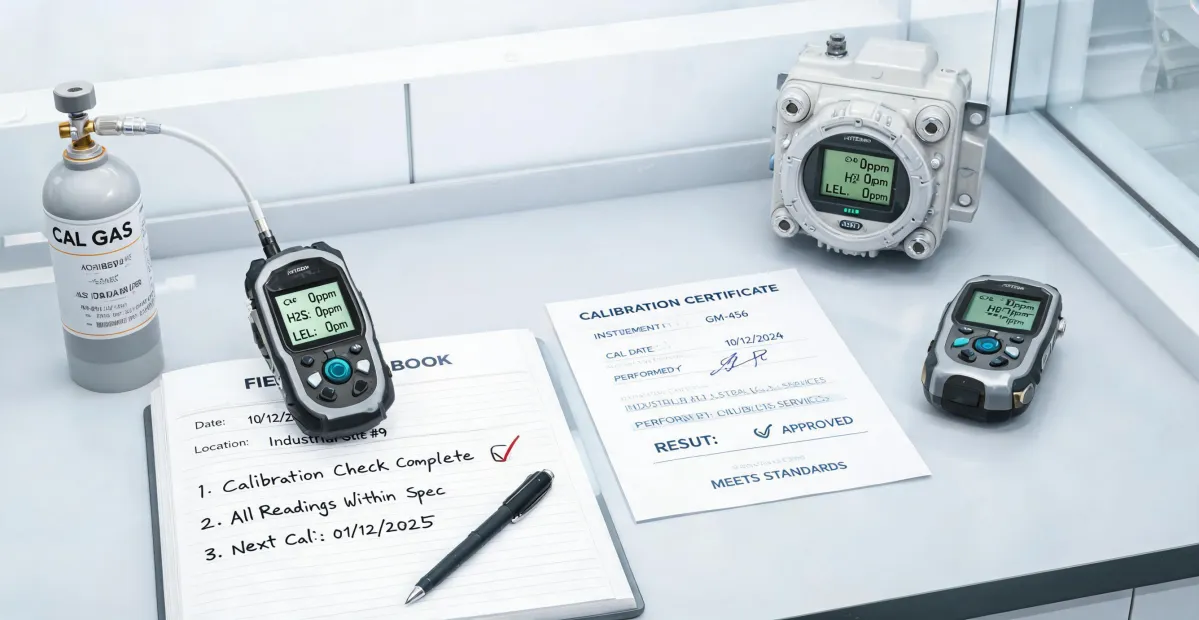
- There’s no one-size-fits-all answer in measurement instruments
- Scenario A: Water flow measurement for utility / industrial use
- Scenario B: Electronic testing — oscilloscopes and multimeters
- Scenario C: Weighing systems for industrial / laboratory accuracy
-
How to decide which scenario you’re in
-
Final thought: transparency is your best quality check
There’s no one-size-fits-all answer in measurement instruments
As a quality compliance manager at an instrumentation company, I review over 200 measurement devices every year. Water meters, oscilloscopes, weighing systems, multimeters — I’ve seen them all. And if there’s one thing I’ve learned: the right tool depends entirely on what you’re measuring and how you’ll use it. Trying to force a single solution across different applications is a recipe for wasted budget and compromised quality.
In this guide, I’ll break down three common application scenarios. For each, I’ll share specific recommendations, including proven models like the sensus OMNI water meter and the Fluke 117 True RMS multimeter. I’ll also highlight a principle I’ve come to value above all else: transparency in pricing. Hidden costs can turn a “cheap” instrument into an expensive mistake.
How to tell which scenario fits you
Before diving into the recommendations, ask yourself three questions:
- What are you measuring? Fluid flow, electrical signals, mass, or general electrical parameters?
- What accuracy do you need? ±0.5%? ±1.5%? ±5%? This dictates the instrument class.
- What’s your operating environment? Indoor lab, outdoor field, or harsh industrial floor?
Your answers will place you into one of the three scenarios below. If you’re a multi-purpose facility, you may need instruments from multiple categories — but each requires its own selection logic.
Scenario A: Water flow measurement for utility / industrial use
Typical users: Water utilities, building managers, process engineers who need to monitor consumption or billing.
For this application, nothing beats a purpose-built water meter. I’ve worked extensively with the sensus line, especially the OMNI and iPERL models. The OMNI is a solid choice for large commercial accounts — its compound design handles both low and high flows accurately. The iPERL, on the other hand, is ideal for residential submetering because of its long battery life and integrated AMR (automatic meter reading).
What I’ve learned the hard way
I assumed a cheaper meter would save money. Didn’t verify its long-term drift specs. Turned out the meter started under-reporting after 18 months, leading to billing disputes that cost us triple the initial savings. (The vendor claimed it was “within industry standard” — their standard, not ours.) Now I always ask: What is the total cost of ownership over 5 years, including recalibration and data reading?
That’s where transparency in pricing matters most. A vendor who lists all fees upfront — installation, seal kits, communication modules, annual verification — is almost always more trustworthy than one who offers a low base price and adds fees later. For sensus water meters, I’ve found their quotes tend to be clear and itemized. (Should mention: I still double‑check the line items for things like “data logger activation fees.”)
Quick tips for sensus water meter reading
- Use the manufacturer’s app (e.g., sensusEye or a compatible AMR system) to capture remote readings.
- For manual reading, the OMNI and iPERL both have a large LCD display — but ensure the battery hasn’t drained below the low‑battery warning threshold.
- Always compare the reading with a test bench once a year. We caught a 2% drift that way in Q3 2024.
Scenario B: Electronic testing — oscilloscopes and multimeters
Typical users: Electronics technicians, R&D labs, field service engineers troubleshooting circuits.
If you’re working with electrical signals, you’ll likely need an oscilloscope (like the classic 465 oscilloscope — a reliable 100 MHz analog scope still found in many labs) and a good true‑RMS multimeter (the Fluke 117 is a popular choice).
How to use the Fluke 117 True RMS multimeter effectively
The Fluke 117 is great for both AC and DC measurements, but the “True RMS” feature is only as good as your setup. Here’s what I tell my team:
- Select the correct range manually if the signal is stable; auto‑range can sometimes hunt and give inconsistent readings.
- Use the LoZ (low impedance) mode when measuring AC voltage to avoid ghost voltages from capacitive coupling.
- For AC current, clamp the meter around a single conductor only. Clamping around both the live and neutral gives you a false zero.
- Check the crest factor. The Fluke 117 handles up to 3.0 — sufficient for most non‑sinusoidal waveforms, but not for extreme spikes.
One thing I see often: technicians assume “True RMS” means automatically correct for every waveform. Not true — it’s better than average‑responding meters, but you still need to know the signal’s crest factor. (Should mention: I was guilty of this assumption myself until a 3% error on a PWM signal cost us a redesign.)
Choosing between analog and digital scopes
The 465 oscilloscope is reliable, but if you need to capture transient events, go with a modern digital storage scope. My rule of thumb: analog for real‑time viewing of repetitive signals, digital for single‑shot captures. And don’t forget to check bandwidth — for most electronic work, 100 MHz is sufficient; for RF, you’ll need 200 MHz or more.
Scenario C: Weighing systems for industrial / laboratory accuracy
Typical users: Pharma QC, food production, chemical batch processing.
Weighing systems present a different challenge: environmental factors (vibration, temperature, airflow) can drastically affect readings. The instrument itself may be accurate, but if your setup is poor, the measurement is useless.
What to look for in a weighing system
- Capacity and readability — never buy a scale that you plan to use near its maximum capacity; aim for 70% usage or less for best linearity.
- Calibration weight class — make sure the scale can be calibrated with traceable weights (e.g., ASTM Class 1 or OIML E2).
- Environmental compensation — some advanced systems include vibration filters and temperature stabilization.
I recall a batch we purchased for a $18,000 project. The vendor quoted a great price, but didn’t mention the $400 annual calibration service was mandatory to maintain warranty. We didn’t have a formal process for checking post‑purchase costs. The third time we ordered the wrong accessory kit, I finally created a checklist that includes “total cost over 3 years.” Now every quote must itemize calibration, service contract, and any required environmental enclosure.
How to decide which scenario you’re in
Still unsure? Here’s a quick decision guide:
- If you measure fluid flow for billing or process control → go to Scenario A. Prioritize long‑term reliability and total cost of ownership. Models like the sensus OMNI or iPERL are proven.
- If you troubleshoot or design electronic circuits → go to Scenario B. Get a 100+ MHz scope (the 465 is fine if you find one in good condition) and a True RMS multimeter like the Fluke 117. Learn its quirks.
- If you need to weigh materials with high precision → go to Scenario C. Focus on the platform, environment, and calibration plan.
- If your work crosses multiple domains — for example, a lab that tests both water purity and electronic components — you’ll need separate instruments. Don’t try to combine functions; dedicated tools always outperform combo units.
Final thought: transparency is your best quality check
Over the years, I’ve learned that the vendor who lists all fees upfront — even if the total looks higher — usually costs less in the end. Hidden calibration costs, mandatory service contracts, and non‑transferable warranties are common traps. In my opinion, asking “what’s not included?” before “what’s the price?” is the most valuable habit a buyer can develop.
Part of me wants to consolidate to one vendor for simplicity. Another part knows that redundancy saved us during the supply chain crunch of 2022. I compromise with a primary + backup approach, and always keep a spare calibration standard on the shelf. No decision is perfect, but with transparency and a clear scenario‑based approach, you can get very close.
Pricing as of January 2025; verify current rates with your vendor.
Marcus Feld
Marcus Feld is an electrical test and measurement analyst specializing in multimeters, oscilloscopes, clamp meters, insulation testers, spectrum analyzers, and data loggers. He applies IEC 61010-2-030 and IEC 61010-031 concepts while examining measurement category, bandwidth, true-RMS response, input loading, and stated uncertainty. His work helps maintenance engineers and test teams choose safe instruments with performance suited to the signals and environments they actually measure.
Leave a Reply