A $213,000 Sensus iPERL Water Meter Upgrade Taught Me the Real Price of Cheap
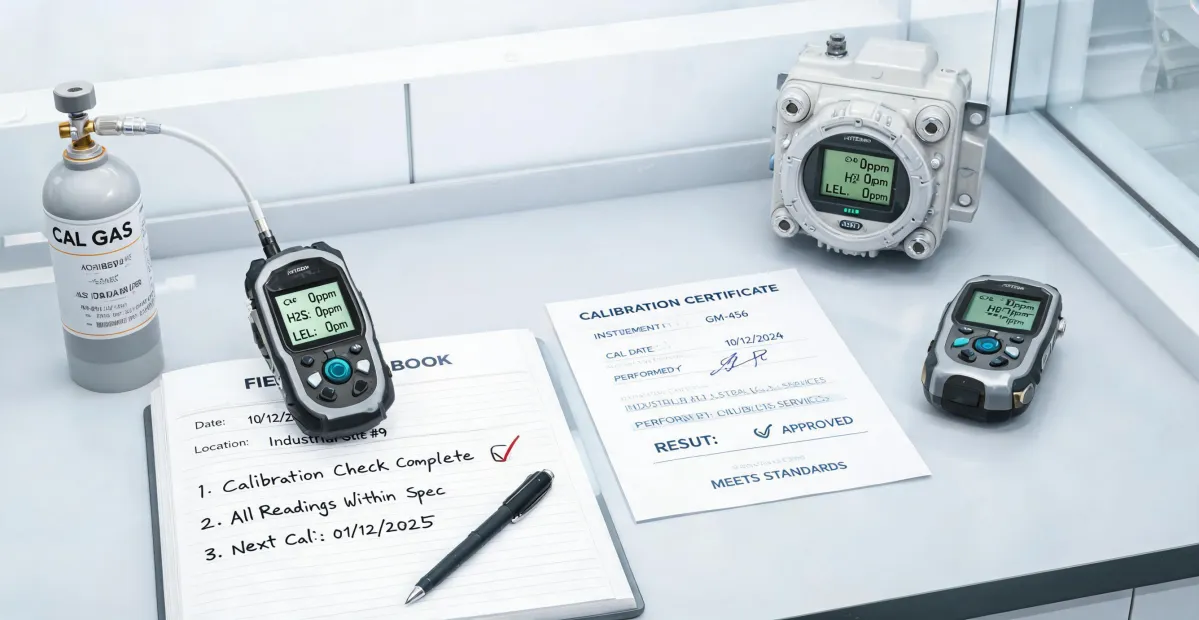
It started on a Tuesday in mid-March 2024. Our finance director slid a printout across the table. "Fourteen percent non-revenue water," he said. "The board wants this fixed by next year."
I'm the procurement manager at a 35-person water district in the Pacific Northwest, serving about 22,000 connections. Our 2024 infrastructure budget was $1.8 million, and the board carved out $213,000 for a meter replacement program: new meters, installation tooling, and verification equipment. My job was to make that money cover everything without cutting corners that would come back to haunt us.
That's how I ended up buried in Sensus iPERL water meter specifications, vendor spreadsheets, and the surprisingly messy question of what tools our electricians actually needed. Six months later, I had a much clearer picture of what "cheap" really costs.
Why We Chose the Sensus iPERL
Our meter fleet was mostly 20-plus-year-old mechanical units. Piston meters, turbines, you name it. Calibration records were patchy, and some older registers were running 30% low. When you multiply that across thousands of connections, it's not a small leak—it's a budget hole.
I started by searching "Sensus iPERL water meter specifications"—which, by the way, most people type as "i-pearl" at least once before they find the real name. The headline spec? Ultrasonic measurement with no moving parts. No gears to wear, no impeller to jam. According to Sensus (sensus.com), the iPERL comes in sizes from 5/8" up to 2", uses solid-state ultrasonic technology, and carries a 20-year expected battery life and a 20-year warranty. In an industry where mechanical meters are often expected to last 10–15 years before needing service, that was a serious differentiator.
The low-flow performance is what really caught my attention. The iPERL captures trickle flows that mechanical meters simply miss—and it does it consistently for years without in-field calibration. The datasheet we received listed accuracy of ±1.5% at mid-flow, though I'd tell anyone to download the current version for their own application. The point is, the iPERL wasn't just a "better meter." It was a different category of measurement.
I was sold on the technology. The real challenge was choosing the vendor to buy through. And that's where I almost made an $18,000 mistake.
Three Quotes, Three Very Different Stories
Our procurement policy requires at least three quotes for anything over $25,000. That policy exists because in 2021 I signed off on a $23,000 pump control order that ended up costing $28,400 after "necessary upgrades" appeared on the final invoice. The most frustrating part: I saw the warning signs and ignored them. You'd think a written line item list would close those gaps, but interpretation varies a lot from vendor to vendor.
In April 2024, I sent the same spec package to three suppliers.
Vendor A quoted $187,000. That included 1,240 Sensus iPERL meters in various sizes, all installation kits, and a reading software license. Every component was itemized, down to the last gasket.
Vendor B quoted $164,000—roughly 12% less. That got the finance director's attention. But their quote had a single line for "accessories and installation," with no breakdown. When I asked for details, the rep said "that's our standard bundle." That single line was a red flag I almost ignored.
Vendor C came in at $158,000, but their meters were a different manufacturer. Not Sensus. Not the iPERL. Not even comparable, so their number didn't matter.
From the outside, it looks like the lowest quote means the vendor is more efficient. The reality is that low quotes usually mean costs are being shifted somewhere else. Here's something vendors won't tell you: the first quote is almost never the final number. There's always a "small addition" for freight. Or a software license that's "not included." Or an optional calibration service that's "strongly recommended."
So I built a TCO spreadsheet. Not because I'm a spreadsheet nerd—because I've been burned before.
- Vendor A: $187,000 base. Adding freight and a two-day installation training session brought the total to $195,000.
- Vendor B: $164,000 base. After adding freight, installation accessories that were "sold separately," the reading software license, and the recommended calibration package, the total came to $213,600.
A $23,000 advantage on paper turned into an $18,600 disadvantage once the fine print was added. I still kick myself for being tempted in the first place. If I'd signed Vendor B's original quote, we'd have blown the budget while claiming to save money.
I called Vendor B and gave them a chance to itemize their quote. The rep assured me "the final invoice would be close to the original." That wasn't good enough for a project with a $213,000 ceiling. Vendor A sent a 14-page line-item proposal within 24 hours. I went with Vendor A.
Outfitting the Crew: Multimeters, Thermal Cameras, and a Flowmeter
The meter order was only half the project. I also had to equip two electricians and a field tech for the upgrade work. That meant three pieces of kit: a reliable multimeter, a thermal imaging camera, and a portable flowmeter for verifying meter accuracy on site.
Let's start with the question I see constantly in trade forums: what is the best Fluke multimeter for electricians? In our case, it was the Fluke 117. It has built-in non-contact voltage detection and a mode that filters out ghost voltages—genuinely useful when you're poking through old control panels. It's not the fanciest unit in the lineup, but it handles maybe 90% of what a commercial electrician does. We bought three of them for roughly $220 each (based on major distributor quotes, January 2025; verify current pricing before you order).
Why not the Fluke 87V? Because for our crew, the extra precision was overkill. The 87V is an excellent industrial meter, but it costs more than double. The 117 was the no-brainer: three 117s for the price of one 87V-and-change, and still enough budget left for the thermal camera.
The thermal camera was a FLIR One Pro LT thermal imaging camera. It attaches to a smartphone, blends visible and thermal images, and it found a loose connection on a pump start panel in week one. The 80×60 thermal resolution isn't scientific-grade, but for spotting hot breakers and overloaded circuits, it's more than enough. The frustrating part of the purchase: one retailer listed it at $199 and another at $249. I almost clicked the $199 listing until I noticed the $249 package included a hard case, a phone mount, and a warranty extension. The accessories alone were worth the difference. That's the difference between a price list and a total cost—and I nearly fell for it again.
It took about an hour to train both electricians on the FLIR app. By week two, they'd scanned all 12 pump station panels.
Then there was the flowmeter. I added a portable ultrasonic clamp-on flowmeter to our Vendor A order for field verification. The unit straps to the outside of a pipe and measures flow without cutting the line. It cost $4,800 with the calibration certificate, and it earned its keep in the first month: we used it to verify three commercial accounts and found they'd been under-billed by an estimated $5,300 in a single billing cycle. That's the kind of data that makes the math easy.
(Side note: the word "flowmeter" gets used for everything from a $40 inline paddle wheel to a $40,000 ultrasonic rig. The cheap ones are basically a waste of money, and the expensive ones are only worth it if you have a meter shop. The clamp-on portable was the sweet spot for us.)
The Result: Under Budget, and Under the Board's Expectations
We signed with Vendor A in late June 2024. The 1,240 Sensus iPERL meters arrived in October, and our crew finished installation by mid-December. The install crew replaced an average of 40 meters per day, which is respectable given that some of the old meter boxes had to be dug out entirely. There was some drama: the remote reading module had a firmware hiccup that briefly cut off daily reads for one neighborhood, but Sensus support responded within a day. I've had that experience with very few manufacturers.
By the late-January 2025 reading cycle, non-revenue water was trending down from 14% to around 9%. Finance projects the metering upgrade will pay for itself in roughly 18 months on recovered revenue alone—before counting the labor savings from not sending crew members to read mechanical registers.
The final cost was just over $200,700, including the flowmeter, the thermal camera, and the three Fluke multimeters. That's about $12,300 under the board's $213,000 allocation. If I'd signed Vendor B's quote, we'd have blown the budget by more than $6,000 while telling everyone we were saving money. The only reason either of those numbers holds is that I did the TCO math before signing instead of after.
Lessons I'd Hand to Anyone in Procurement
Honestly, it took getting burned in 2021 to build the habit. If you're about to buy meters, or tools, or anything with an "accessories" line, here's what I've learned:
- Ask "what's NOT included" before you ask "what's the price." The vendor who lists all fees upfront—even when their total looks higher—almost always costs less in the end.
- Build a TCO spreadsheet for any purchase over $10,000. It took me 20 minutes in Google Sheets. It saved this project over $18,000.
- Target the cheapest total cost, not the cheapest sticker. The Fluke 117 was the right call for our crew at $220 per meter; the $40 hardware-store meter we tried in 2022 gave readings that were flat-out wrong. Wrong readings are the most expensive kind.
- Match the tool to the job. The FLIR One Pro LT is not a research-grade thermal camera, but it's exactly what a maintenance crew needs to spot a failing breaker before it fails. Don't buy precision you don't need—and don't cheap out on the precision you do.
Bottom line: transparency from a vendor says more than their opening number. I've got the spreadsheet to prove it.

Marcus Feld
Marcus Feld is an electrical test and measurement analyst specializing in multimeters, oscilloscopes, clamp meters, insulation testers, spectrum analyzers, and data loggers. He applies IEC 61010-2-030 and IEC 61010-031 concepts while examining measurement category, bandwidth, true-RMS response, input loading, and stated uncertainty. His work helps maintenance engineers and test teams choose safe instruments with performance suited to the signals and environments they actually measure.
Leave a Reply