Fluke vs Hioki Multimeters: A Field Comparison for Emergency Instrument Replacements
In my role coordinating emergency instrument replacements for industrial and utility maintenance teams, I don't get to test multimeters in a quiet lab. I test them in a muddy meter pit, on a lift at 6 AM, or 20 minutes before a permit inspection deadline. The two names I keep coming back to are Fluke and Hioki. If you're weighing a Hioki multimeter vs Fluke decision for your own crew, here's how I compare them under pressure — and why a good multimeter alone won't save a job that also needs a Sensus water meter cover, a Magnehelic differential pressure gauge, or a point micrometer.
First, what I actually compare: durability in field conditions, safety ratings, usability with gloves, calibration and repair turnaround, and total cost including shipping. I care less about which meter has the highest count on paper. The question isn't 'which is better.' It's 'which one will still be working on Thursday when the crew is on site?' That's it. Time. Feasibility. Risk.
I started thinking this way after a costly mistake. In my first year, I made the classic specification error: I ordered a high-precision point micrometer for a dimensional check without verifying the calibration certificate. Cost me $300 in expedited calibration and a half-day of lost production. Since then, I treat every tool in the chain as a potential failure point — including the multimeter your technician carries.
Durability: Dropped Meters, Sensus Covers, and the Mud Factor
Fluke and Hioki both build tough meters, but they have different field personalities. The Fluke 87V has survived more drops from ladder rungs than I can count. Hioki's DT4200 series also uses robust casings and is generally lighter, which matters when you're climbing out of a meter pit. According to their published specs, both are built for industrial use (Sources: fluke.com and hioki.com, accessed January 2025).
Why does durability matter? Because in a water utility call, you're often changing a Sensus water meter cover at the same time. Replacing a damaged cover involves prying, lifting, and sometimes slipping. I've seen a technician knock a multimeter off a valve box into a puddle. That detail reflects professionalism. A cracked Sensus water meter cover or a meter that won't shut off effectively is more than a repair issue — it's a signal to customers that the utility isn't paying attention.
Durability isn't just about drops, though. It's about dust and moisture. A Magnehelic differential pressure gauge is analog, simple, and forgiving; a digital multimeter is more sensitive. Both Fluke and Hioki publish IP ratings, but IP ratings aren't a guarantee. I always put a meter in a dry bag if it's going near an open valve. (Note to self: buy more dry bags.)
Safety and Accuracy: Ratings Beat Brand Loyalty
When I'm called to perform a Sensus water meter shut off before electrical work on a well pump, the first thing I check isn't the brand of the multimeter. It's the CAT rating. According to Fluke's published specifications, the 87V is rated CAT III 1000 V and CAT IV 600 V. The Hioki DT4256 is rated CAT IV 300 V and CAT III 600 V (Source: hioki.com, accessed January 2025). Both are suitable for many industrial maintenance tasks — but you have to verify the rating for your specific measurement point.
Accuracy is where spec-sheet shopping backfires. A point micrometer gives dimensional precision because its anvil has a small contact point; a multimeter gives electrical precision through its analog-to-digital conversion and shielding. They are not interchangeable, but the buying logic is similar: a meter with a better basic accuracy spec can be the wrong choice if the input protection is weak. Neither Fluke nor Hioki skimps on input protection, but lower-cost online brands sometimes do. That's a lesson I learned the hard way. I knew I should have checked the CAT rating before ordering a budget meter, but thought 'what are the odds?' Well, the odds caught up with me when it failed during a motor test. No one was hurt, but the meter was toast.
Usability Under Gloves and Deadline Pressure
Fluke's rotary switch is an industry default. Some electricians can use it without looking. Hioki's layout is also logical, but it's different. In an emergency, the meter your technician knows best is faster than the one with a slightly better spec. The decision isn't 'which is easier for me.' It's 'which will be easiest for the person using it under a deadline.'
I've seen a contractor spend 20 minutes trying to find the manual-range button on an unfamiliar meter while an inspector waited. That's not a fault of the meter. It's a training gap.
Calibration, Repair, and Lead Times
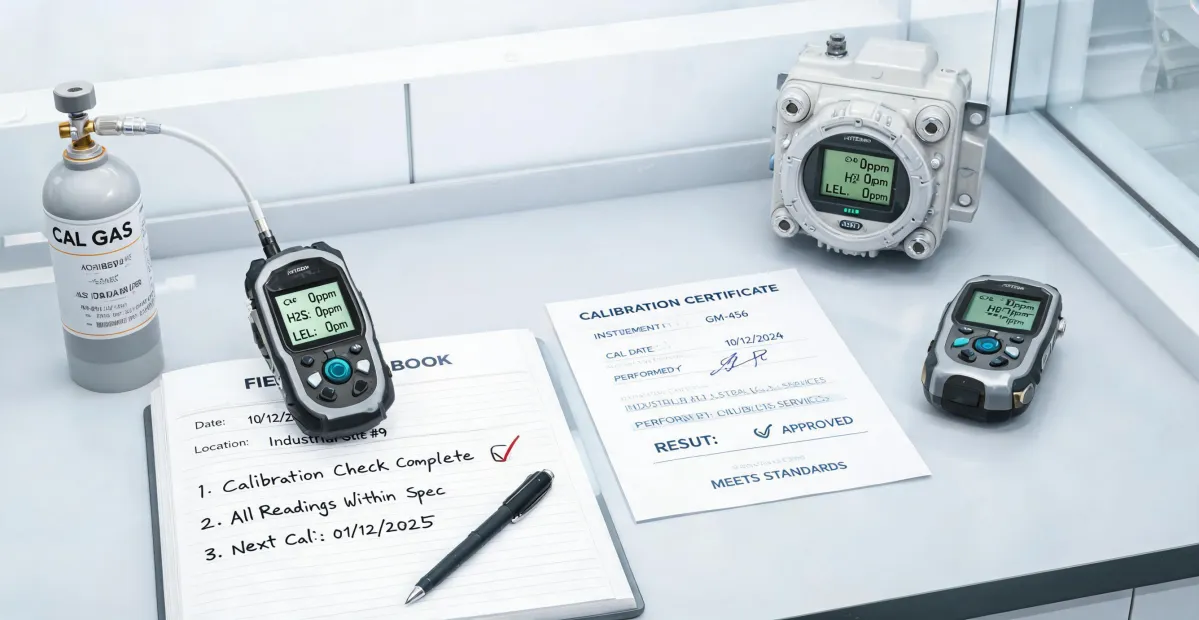
This is the part most comparison reviews skip, and it's the one I care about most. In March 2024, a client called at 6 PM needing a replacement multimeter for an 8 AM inspection. The normal distributor order was five business days. We found a Fluke 87V at a local supplier 45 minutes away, paid $65 in courier fees, and the inspection passed. The alternative was a $15,000 penalty clause in the client's contract. That experience made me realize: brand choice matters less than the local supply chain available to you.
I also check calibration turnaround. Fluke has a large service network, and Hioki's calibration services are available through many distributors. But 'available' doesn't mean 'fast.' Ask your distributor how many days they actually need for calibration, and whether they have a loaner program. (I really should document this for every vendor I use.)
Price and Total Cost
Let's be honest: price is part of every emergency decision. Based on distributor quotes I received in January 2025, a Fluke 87V is around $420–$480; a Hioki DT4256 is around $230–$290. Verify current pricing before you order. That roughly $150 gap might not matter for one meter, but it matters if you're equipping five technicians. However, the lowest upfront price doesn't always mean the lowest total cost. If you pay $250 for a meter and then need $120 in expedited calibration, the cheaper meter just got more expensive.
What About the Rest of the Kit?
When I triage an urgent field call, a multimeter is only one line on the checklist. For water utility crews, I always ask three questions:
- Is the Sensus water meter cover intact? If not, order a replacement by model number — don't guess.
- Do you know the Sensus water meter shut off procedure for this site? Confirm it, and verify zero energy before opening any electrical panel.
- Do you need a pressure measurement? A Magnehelic differential pressure gauge is still a common choice for filter monitoring, because it has no electronics to fail and is easy to read in the field.
For dimensional checks, a point micrometer belongs in a different kit bag, but it's often ordered through the same channel and with the same urgency. I once skipped a final calibration check on a point micrometer before shipping it to a plant. It was off by 0.0005 inches. The plant caught it before production started, but only because they checked. That was the last time I trusted a 'new tool' sticker without a certificate.
Fluke vs Hioki: Which Should You Choose?
I like both, but I'd choose based on scenario, not brand loyalty. Data once pointed me to Hioki for a five-meter purchase because the total cost was 18% lower. My gut said stay with Fluke because the plant's electricians already had Fluke current clamps and leads. I went with my gut. The training was seamless and nobody argued about accessories. Sometimes compatibility outweighs the spec advantage.
- Choose Fluke if you're replacing an existing fleet, your technicians are already trained on the rotary switch, your calibration vendor stocks Fluke parts, or a client contract explicitly requires a Fluke model.
- Choose Hioki if you need several meters on a tighter budget, you prefer a lighter form factor for daily carry, or you need logging capability without jumping to a higher price bracket.
- When neither matters: choose the meter that's available today from a distributor you trust. A 600 V-rated meter in your hand beats a perfectly specified meter that's still in a warehouse.
In an emergency, availability is a feature.
The most frustrating part of emergency tool procurement is that the same issues repeat: unclear model numbers, vague stock promises, and last-minute 'actually, it's on backorder.' You'd think a written purchase order would prevent that, but it doesn't. After three failed rush orders with discount vendors, I now only use suppliers who can give me a specific delivery date in writing.
So, Fluke or Hioki? For most utility and industrial teams, both are defensible. Choose Fluke when consistency with your existing tooling matters more than price. Choose Hioki when you need good performance at a lower cost per unit. And for the rest of the job — the Sensus water meter cover, the shut-off procedure, the Magnehelic differential pressure gauge, and the point micrometer — don't let the multimeter argument distract you. The meter is only one part of the answer. The whole kit has to be ready before the crew leaves the shop.
Because in the end, what your customer sees is not just a number on a screen. It's a utility that shows up prepared, with covers that fit, meters that shut off, and tools that are calibrated. That's what professionalism looks like.

Marcus Feld
Marcus Feld is an electrical test and measurement analyst specializing in multimeters, oscilloscopes, clamp meters, insulation testers, spectrum analyzers, and data loggers. He applies IEC 61010-2-030 and IEC 61010-031 concepts while examining measurement category, bandwidth, true-RMS response, input loading, and stated uncertainty. His work helps maintenance engineers and test teams choose safe instruments with performance suited to the signals and environments they actually measure.
Leave a Reply