I Wasted $3,200 on the Wrong Sensus Meters—and Other Equipment Buying Mistakes
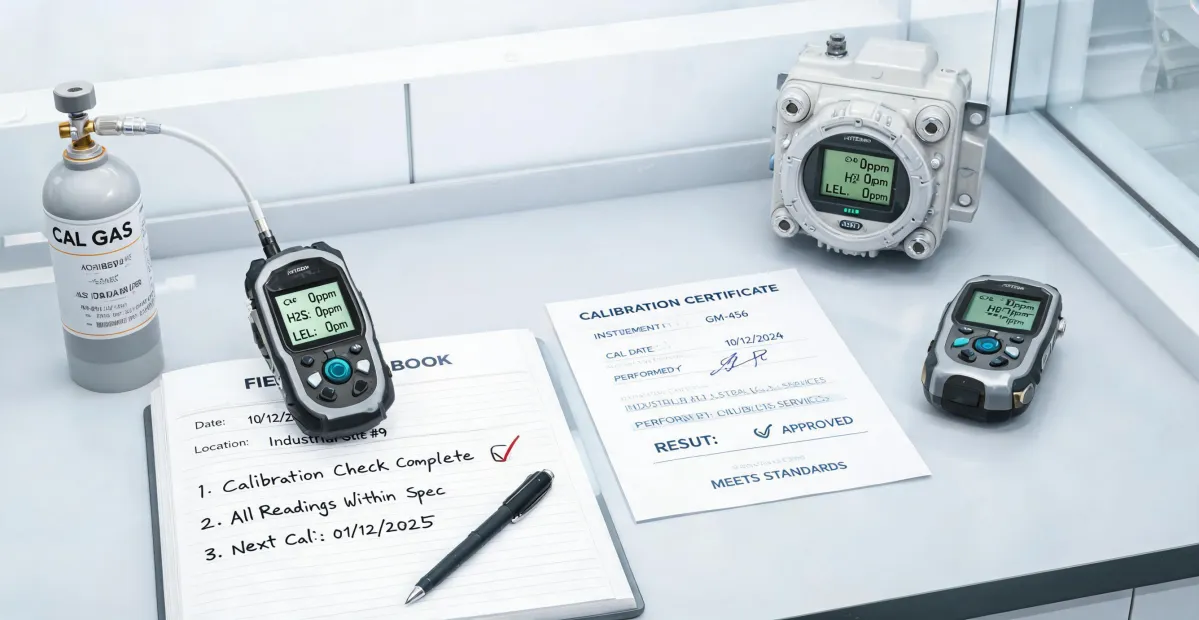
In September 2022, I submitted a purchase order for 14 Sensus iPERL water meters. Looked fine on paper. Specced a project I'd successfully done the year before. Confident enough that I skipped the final verification call with the supplier.
The meters arrived right on time. We installed them. Six of the 14 wouldn't talk to the existing AMI network.
Different radio frequency. I'd assumed the new iPERL model communicated with the same collector units as the older batch we used in 2021. It didn't.
The redo cost us $3,200 in rushed shipping, replacement meters, and extra labor. Straight out of the project budget, followed by a very uncomfortable conversation with my supervisor.
That's when I stopped treating equipment purchases as a formality. Since then, I've built a simple verification checklist that has caught 47 potential errors in 18 months. And I'm honestly a bit embarrassed it took me that long.
The Surface Problem: "The Equipment Is Bad"
When gear fails in the field, the natural instinct is to blame the tool. The Sensus meter is defective. The caliper's readings are drifting. The voltage tester is giving false signals.
In my experience, that's rarely the actual problem.
Over seven years of ordering and using measurement instruments, I've learned the hard way that equipment failures usually trace back to a mismatch between what we need and what we bought. Or a gap in how we use it. Or a shortcut we took during selection.
I've made all three mistakes. Multiple times. Here's the pattern I kept repeating.
The Root Cause: We Don't Verify Anything
It goes like this. A project comes in. I need a water meter, a voltage tester, a digital caliper, maybe a pipette for the lab side. I search online, find something that looks right, compare the price, and click order.
What I don't do:
- Read the full spec sheet
- Check compatibility with existing infrastructure
- Verify calibration or certification
- Ask what support actually comes with the product
That last one hurts the most. "Sensus support" doesn't mean the same thing for every product. For some meters, you get full documentation and direct technical help. For others, you get a PDF and whatever you can find on a forum from 2019.
I found that out the hard way when I ordered a Sensus meter with a radio module that turned out to be discontinued. No support. No firmware updates. No one to call. The meter itself was fine—but it couldn't do the one thing I needed it to do, and I had no path to make it work.
Eventually, I realized I wasn't bad at installing equipment. I was bad at checking the assumptions underneath every order.
What "Sensus Support" Actually Means (In My Experience)
Quick disclaimer: my experience is based on maybe 40+ Sensus-related purchases and integrations over the past few years. If you're working with a different product line or a different region, your experience might differ.
Here's what I've learned:
Support levels are not equal. Commercial water utility customers get a different tier of service than someone buying a few meters for a small project. That's not a secret—it's how the industry works.
Documentation quality varies by product. The iPERL and OMNI series have solid technical docs. Some of the legacy products are thin on detail. Check that the manuals actually exist before you commit.
The first person you talk to might not know your application. I called Sensus support once with a specific question about pulse output wiring on an OMNI meter. The person on the phone put me on hold for seven minutes, transferred me twice, and eventually someone who knew the product gave me a two-wire answer I could've found in the manual—if I'd read it first.
Now I ask for a senior tech or a regional rep when the question gets technical. And I read the manual first.
The Cost of Getting It Wrong
Let me be specific about what these mistakes actually cost. Not to dramatize—to make it concrete.
Money: The $3,200 Sensus redo. The $890 Mitutoyo order that came from an unauthorized seller and fell apart after two months. The $450 batch of lab pipettes that didn't fit the tips we already stocked.
Time: A 1-week delay on the meter project while replacement parts shipped. A 3-day production delay when our lab stopped volume measurements because the pipette gun had the wrong adapter. Hours on hold, re-explaining the same problem to different support agents.
Credibility: This is the one that stings. When you tell a client "the equipment was wrong," they hear "I didn't check before I ordered." After the second incident, my supervisor started asking for pre-purchase justifications before approving anything. That trust takes a long time to rebuild.
The Specific Products I Keep Seeing People Buy Wrong
Sensus Water Meters
Sensus makes genuinely good products. The iPERL is one of the more widely deployed smart meters in the industry, and the OMNI series has earned its reputation. But good meters don't work if you buy the wrong variant.
I've seen failed installations caused by:
- AMI vs AMR communication type mismatch
- Wrong flow range for the application
- Register units in cubic feet instead of cubic meters
- Thread size or end connection mismatches
Every one of these is visible on the spec sheet. Every one of these is easy to miss when you're in a hurry.
Fluke 1AC II Non-Contact Voltage Tester
The Fluke 1AC II is a great little tool. It does exactly one thing: it tells you whether voltage is present near the tip. That's its entire job.
The mistake I see people make is treating it as a diagnostic instrument. It's not. It's a safety indicator. You use it to do a quick pre-work check. You don't use it to troubleshoot a circuit.
I once watched a colleague chase an electrical issue for an hour with a 1AC II, convinced the tester was giving false readings. The tester was fine. It was picking up induced voltage near the conduit. The problem was in the wiring, not the tool.
I'm not 100% sure why people expect more from it. My guess: the "non-contact" feature makes it feel more advanced than it is. It's a pointer, not a multimeter. If you need actual readings, buy a meter with a display.
Mitutoyo 8-Inch Digital Caliper
Mitutoyo calipers are excellent. The 8-inch digital model is a mainstay in machine shops and QA labs for good reason.
But if you're searching "where can I buy a Mitutoyo 8 inch digital caliper," the answer matters more than the price. Buy it from an authorized dealer. Full stop.
I bought one from a marketplace seller once because it was $40 cheaper. The caliper looked right. The calibration certificate was a bad photocopy. The battery compartment had wear marks suggesting it wasn't new.
Two months later, the zero point started drifting. When I tried to get warranty service, I hit the wall every precision tool buyer fears: no original invoice from an authorized dealer, no warranty. The seller's listing was gone. I was out the money and the tool.
The $40 I saved cost me $890. That math still annoys me.
Pipette Guns (Stick With Me)
This might seem out of place, but pipette guns follow the same pattern. These electronic pipette controllers are common in labs, and people buy them based on brand alone—Eppendorf, Mettler Toledo—without checking three things:
- Whether the pipette accepts the tips their lab already uses
- Whether the calibration interval matches their SOP
- Whether the charger and stand are included in the price
I ordered a batch of pipette guns for a client without checking tip compatibility. The guns were fine. The tips were fine. They just didn't fit together. Four hundred and fifty dollars of 'fine' sitting in a box until we sourced the right adapters.
Take this with a grain of salt—lab procurement is broader than my usual field. But the lesson is universal: verify before you order.
Why This Keeps Happening
Product catalogs are getting bigger, not simpler. More meter variants. More voltage testers. More caliper models. More online sellers, each with slightly different inventory and policies.
The industry is also moving toward digitized procurement. I think that's a good thing overall—efficient, traceable, fewer manual paperwork errors. But it has a side effect: people click "buy" based on a product page image and a budget number, with no verification step in between.
I'm not saying we should go back to paper catalogs and phone orders. I'm saying the digital process needs a deliberate check built into it.
The Checklist I Use Now
I won't give you a 47-point quality manual. I use six questions before every equipment order:
- What exact spec must this meet? Not "good enough." The actual number.
- Is it compatible with what we already have? Communication protocols. Physical connections. Software versions.
- What support comes with it? Documentation. Phone access. Warranty terms.
- Is this an authorized purchase channel? Especially for Fluke, Mitutoyo, Sensus, and similar brands.
- Does the published spec match my requirement? Read both side by side.
- What else do I need to buy to make this work? Tips, adapters, batteries, software, cables.
That's it. Six questions. About 15 minutes.
The checklist has caught 47 potential errors in 18 months. Wrong variants. Unauthorized sellers. Missing accessories. Each one would have been another reorder, another delay, another project over budget.
Bottom Line
Most equipment failures in my experience are not equipment failures. They're buying failures. The meters, testers, and calipers from reputable brands are usually built to spec. The problem is that we treat them like interchangeable commodities when they are not.
If you're about to order a Sensus meter, a Fluke 1AC II, or a Mitutoyo caliper, spend the 15 minutes. Read the spec. Verify compatibility. Check the seller.
That $3,200 mistake in September 2022 was the last big one I've made. I'd rather you learn this lesson for free.

Marcus Feld
Marcus Feld is an electrical test and measurement analyst specializing in multimeters, oscilloscopes, clamp meters, insulation testers, spectrum analyzers, and data loggers. He applies IEC 61010-2-030 and IEC 61010-031 concepts while examining measurement category, bandwidth, true-RMS response, input loading, and stated uncertainty. His work helps maintenance engineers and test teams choose safe instruments with performance suited to the signals and environments they actually measure.
Leave a Reply