Sensus Water Meter Parts vs. Aftermarket: A Cost and Reliability Comparison
I've been responsible for maintenance procurement at a 40-person water utility for about six years. Our annual spend on meter parts and test equipment has been somewhere between $30,000 and $40,000 in most years—cumulatively, maybe $180,000, though I'd have to check the spreadsheet before giving you an exact number. I'm telling you that because this is not a 'buy OEM and never think again' article. I've bought both OEM Sensus water meter parts and aftermarket replacements. I've saved money. I've also paid the price for saving money.
The comparison I keep coming back to is OEM versus aftermarket. Specifically, Sensus water meter parts, because that's what we order most: meter boxes, covers, registers, and small components like Sensus water meter cover replacements. I'm going to compare them on three dimensions: total cost, fit and durability, and verification. Not the order most sales reps use, but the order that has directly impacted my budget.
One warning before we start: I don't have hard data on nationwide defect rates for aftermarket Sensus parts. I can only speak from our own purchase history. What I can say anecdotally is that our rework rate dropped after we changed how we buy.
Why This Comparison Matters
If you're reading this, you're probably facing the same question I had: Why would I pay $79 for an OEM cover when the aftermarket one is $38? On paper, the aftermarket part wins. In the field, it's not that simple.
Three things matter: total cost, fit, and verification. In that order. I'll explain each one, and I'll include the test equipment and calibration paperwork we use to avoid guessing.
Dimension 1: Sticker Price vs. Total Cost
Let's start with the number that's easiest to compare: price. The last time I ordered aftermarket Sensus water meter parts, the cover was $38 each. The OEM Sensus water meter cover from our regular distributor was $79. I want to say that was 2024, but don't quote me on current pricing. It could be $82 now.
If you look only at that, the aftermarket choice looks obvious. But total cost includes labor, downtime, and the chance that the part doesn't fit.
I only believed that after ignoring it. In 2022, I bought 20 aftermarket covers to save about $900 on a bulk order. Two of them didn't seat well. One leaked during a pressure test, and we had to take a crew back out. The extra labor and the redo cost us around $1,200. The $900 savings disappeared. Lesson learned the hard way.
Since then, I've applied a simple rule: if the part failure doesn't cause a site visit, I'm willing to consider aftermarket. If it causes a site visit, the OEM is usually cheaper. For a water meter, a $900 savings is not worth two callback trips.
Dimension 2: Fit and Durability of the Sensus Water Meter Cover
This is where OEM parts showed the clearest advantage for us. Sensus has a lot of variations across its iPERL, OMNI, and older meter lines. The 'same' cover from one generation doesn't always match the next.
An aftermarket cover might be within a millimeter or two of the original. Usually that's fine. But not always. A cover that sits too high can catch a mower. A cover that sits too low can fill with mud and block the read. Not ideal, but workable. But when the cover is in a spot that floods, workable isn't good enough.
I went back and forth between OEM and aftermarket for the covers on our most active meters. OEM meant a higher unit cost and a guaranteed fit. Aftermarket meant saving maybe $400 a year, but with a small chance of sending a tech back a second time. I kept asking myself: is $400 worth a potential afternoon of downtime?
After that 2022 failure, I stopped asking. We now use OEM covers for any meter that's currently billing. Aftermarket covers go on inactive meters where a perfect seal isn't critical.
Dimension 3: Verification, Multimeters, and Calibration Sheets
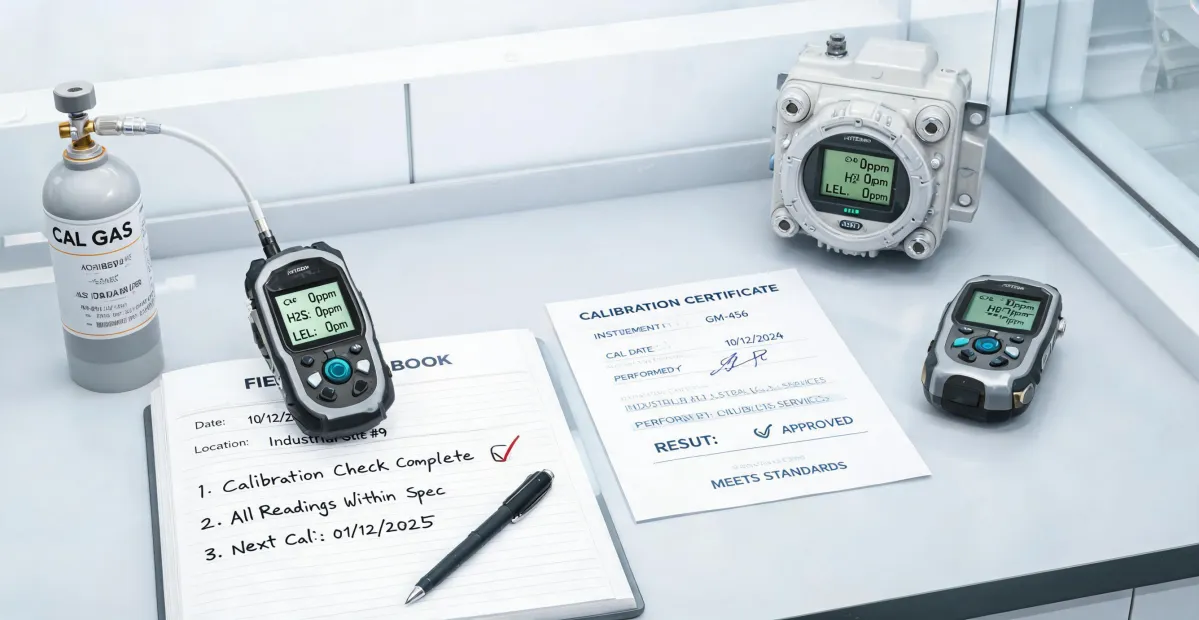
Price and fit are only half the story. You also need to verify that the part's electronics work before installation. This is where our test equipment decisions matter.
Our field techs use a Fluke 87V industrial multimeter. It's not the cheapest option. But it's rugged, and the voltage and continuity readings are stable enough for our meter troubleshooting. We use it to check contact closures on remote read cables and to confirm whether a Sensus register is sending a signal before we bury the box. In my opinion, the 87V is worth the premium if you're working outdoors in dirty environments.
We also have a Fluke 117 multimeter in the shop for bench work. The 117 is a good meter—if you're doing basic electrical checks, it gets the job done. I won't say it's the same, because it isn't. The 87V is heavier and has a few more features. But I've seen both do 90% of the same jobs. The difference matters more in the rain than on a clean workbench.
Reading a Rice Lake Weighing Systems Calibration Sheet
If you're wondering how to read a Rice Lake weighing systems calibration sheet, here's a practical walkthrough. I'm not a metrology expert, but I've had to read enough calibration sheets to develop a system. Rice Lake Weighing Systems calibration sheets look technical, but they follow a pattern. Here's what I look for:
- Header information. Scale or indicator model, serial number, capacity, and calibration date. If the due date has passed, the sheet is old news.
- Reference standards. There should be a line stating which test weights were used and whether they are NIST-traceable. That's your proof the standard itself was calibrated.
- As-found vs. as-left readings. As-found shows the error before adjustment. As-left shows the result after calibration. If as-left is blank, the tech may not have adjusted anything.
- Error and tolerance. The actual difference between the display and the test weight should be within the stated tolerance. If it's not, there should be a fail note or a 'repair needed' section.
If the certificate has an accreditation symbol, the lab is typically audited under ISO/IEC 17025. I trust that more than a generic 'calibrated' stamp. But don't quote me on every layout—I'm sure different Rice Lake product lines have their own forms.
What Should You Buy?
- Routine, low-risk meters: Buy aftermarket if the part isn't tied to billing and a callback is unlikely. We use aftermarket covers on inactive meter pits. It saves us about $400 a year, and we've had almost no trouble.
- Active meters and deadline-driven work: Buy the OEM Sensus water meter part. The price difference is usually less than the cost of one extra site visit. In March 2024, we paid $350 extra for next-day OEM delivery of a Sensus water meter cover. The alternative was missing a commercial tenant move-in date. That missed deadline would have been a much bigger conversation.
- If you're setting up a test kit: Buy the Fluke 87V if your techs work outside. Buy the Fluke 117 if you need a reliable bench meter and want to save a little money. Don't base the decision on brand loyalty. Base it on where the meter will be used.
- If you see a Rice Lake calibration sheet: Read the as-left and tolerance columns before you sign off. A pass sticker means nothing if the underlying data doesn't match the application.
I used to think the real question was OEM vs. aftermarket. It isn't. The real question is which part can get the meter back to work without creating a second trip. If you calculate total cost instead of sticker price, the answer usually becomes clear.
One last thought: the value of guaranteed delivery isn't the speed; it's the certainty. When a tenant is moving in and the water meter has to be live, a guaranteed arrival date is worth more than a discounted price with an estimated date. In my experience, that uncertainty premium is the cheapest insurance you can buy.

Marcus Feld
Marcus Feld is an electrical test and measurement analyst specializing in multimeters, oscilloscopes, clamp meters, insulation testers, spectrum analyzers, and data loggers. He applies IEC 61010-2-030 and IEC 61010-031 concepts while examining measurement category, bandwidth, true-RMS response, input loading, and stated uncertainty. His work helps maintenance engineers and test teams choose safe instruments with performance suited to the signals and environments they actually measure.
Leave a Reply